Prague's Manual for Urban Planning

For years, Prague's public spaces were shaped by car-centred planning and inconsistent standards. In 2014, the Prague Institute of Planning and Development (IPR Prague) addressed this with the Public Space Design Manual, a single governance document setting out principles, rules and criteria for anyone involved in planning, designing or maintaining public space in the city.


Written in accessible language and illustrated throughout, it speaks to everyone from municipal officials and private developers to designers and residents. In 2024, the manual was selected among the EUROCITIES' "Living Spaces" initiative as one of its 30 best-practice examples - a recognition that followed a decade of continuous use and revision.
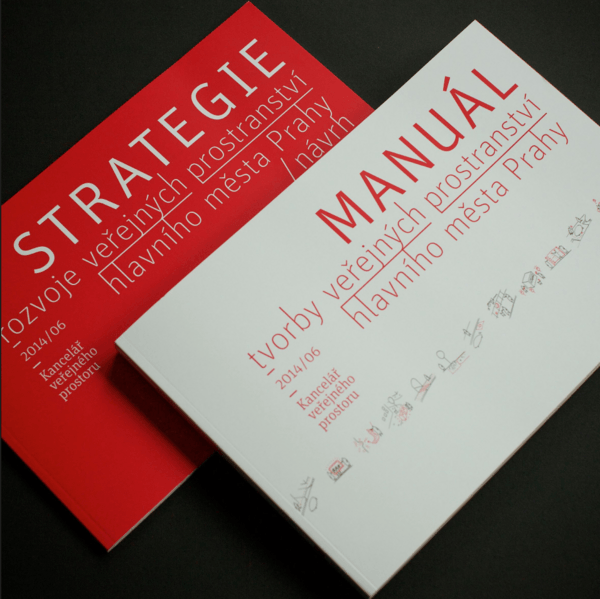


The manual does not prescribe fixed designs. Instead, it covers how different types of public space function, how streets and traffic should be managed, and how individual elements such as trees, surfaces and street furniture should be handled. A team of 12 at IPR Prague worked on the original document.

Since publication, two further "plug-in" documents have built on it: Art in Public Space, and the Catalogue of Recommended Elements, which offers more site-specific solutions. A 2015 evaluation by architects and urban planners found the manual had shifted practice towards higher-quality public space, and IPR Prague points to its continued use and expansion as the clearest sign it has worked.

That said, applying the manual has not been straightforward. Because it sets out principles rather than ready-made solutions, interpretation varies between projects. Prague's fragmented administrative structure, spanning many municipal districts and organisations, and shifting political priorities have added further friction. IPR Prague has responded by developing more detailed guidance through the Catalogue, working with the city's public space management company on internal standards, and consulting stakeholders more closely in decision-making.

A new USE case study sets out the full story, including IPR Prague's advice for other cities: involve stakeholders from the outset, keep any manual accessible, align it with existing legislation, and tailor it to local administrative realities.

View the case study

Explore more USE case studies