Prague Public Space Design Manual: A Governance Tool for Urban Space Transformation

Status
ongoing
50%
City

Prague

Main actors

City Government

Project area

Whole City/Administrative Region

Duration

Ongoing since 2014

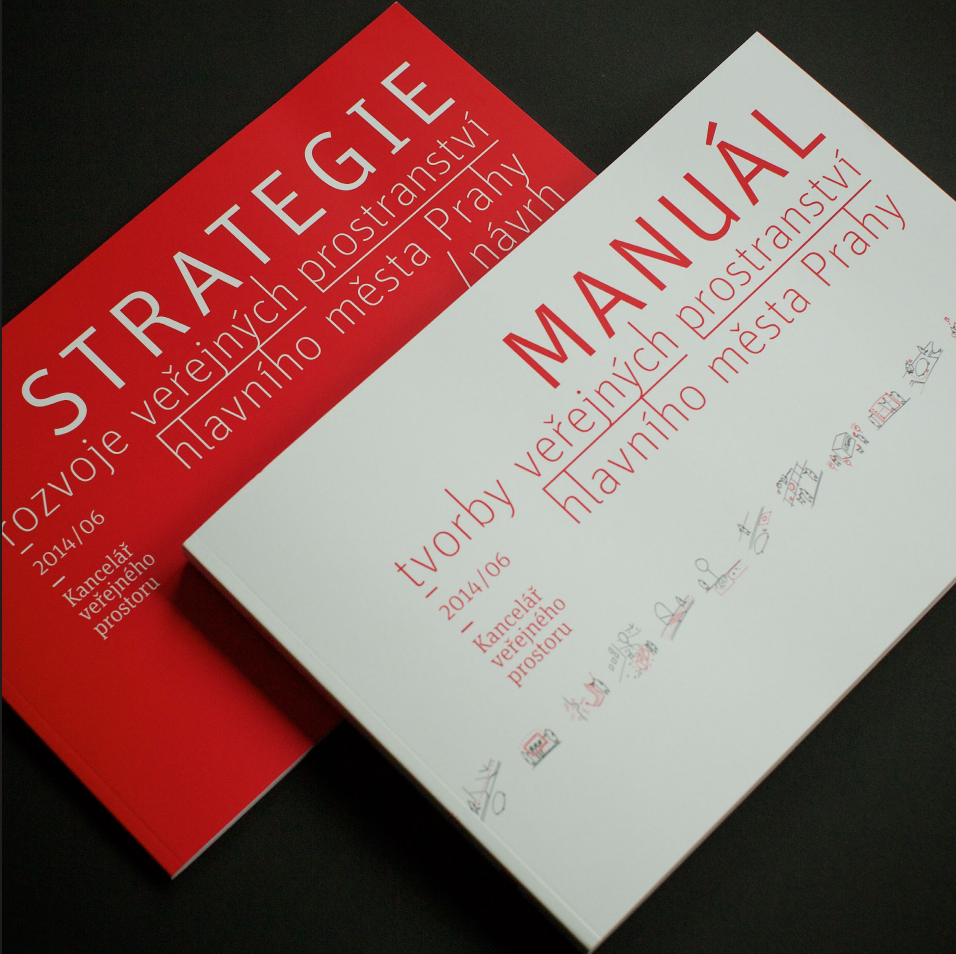
The Prague Public Space Design Manual is a public governance document published in 2014 by the Prague Institute of Planning and Development (IPR Prague). It sets out principles, rules, recommendations and criteria for the creation of public spaces across the city, addressing everyone involved in the investment, planning, design, approval, maintenance and operation of public space: municipal and district officials, planners, designers, private investors and the public.

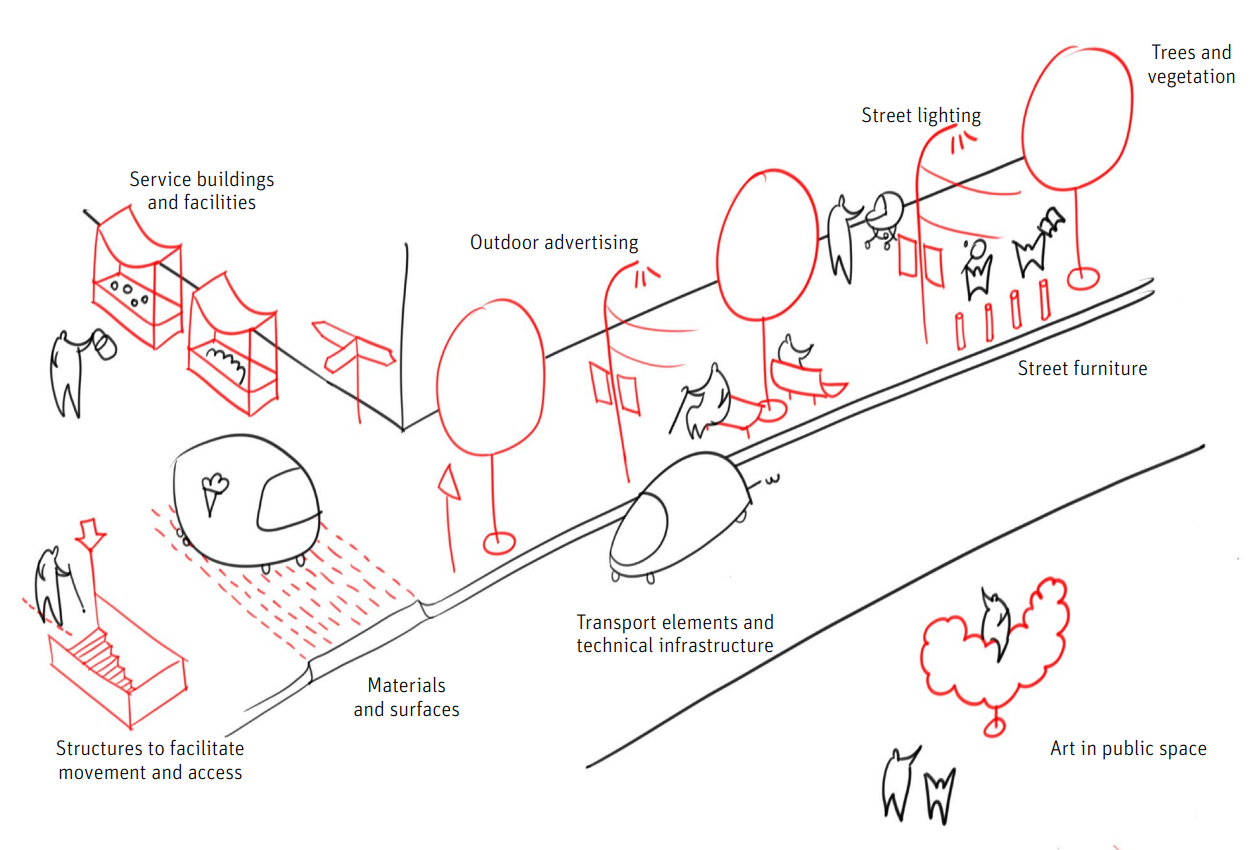
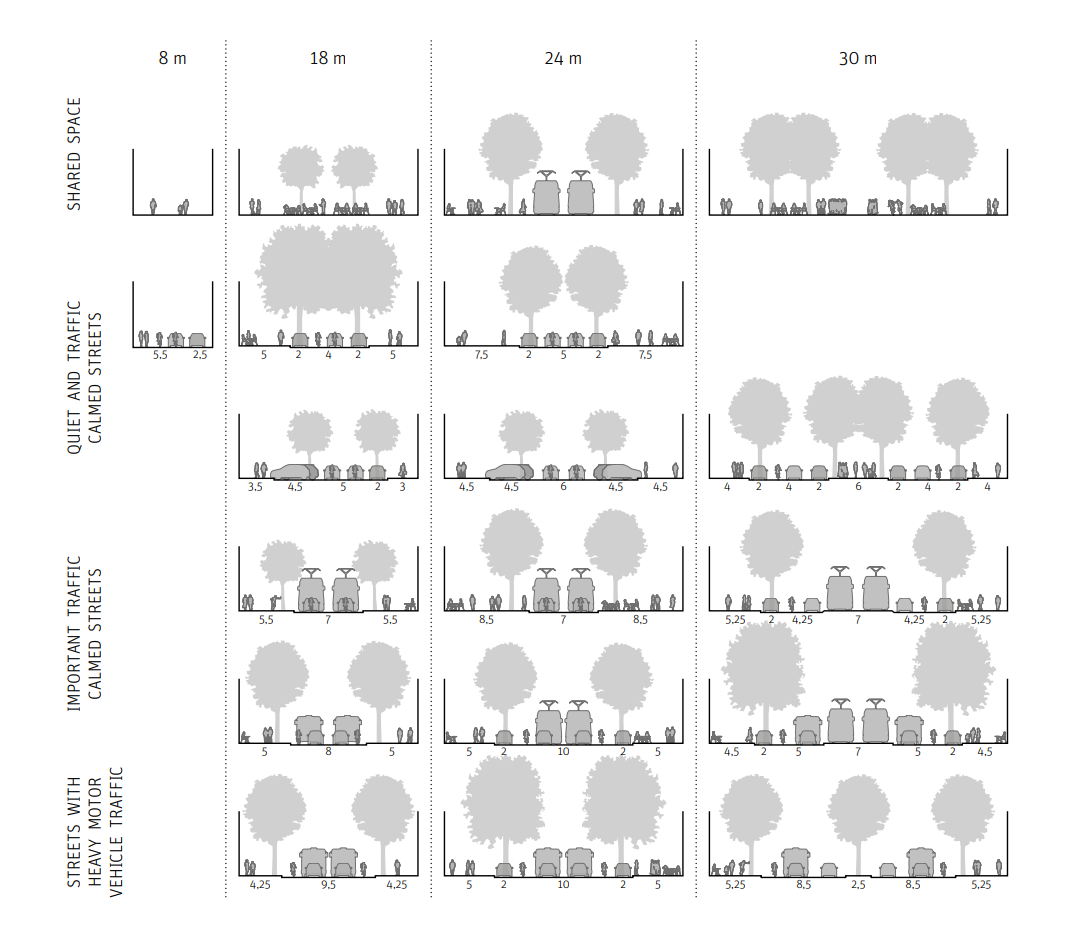
The manual responds to many years of poor-quality public space construction and maintenance, and to the legacy of car-centred planning in Prague. Using accessible language and illustrations, it communicates goals and principles for making the public realm more liveable and less car-oriented, covering the different types of public space and their role in the city, streetscape and traffic management, and individual components such as street furniture, trees, technical elements and surfaces.

Since publication, two “plug-in” documents have extended the manual: “Art in Public Space” and the “Catalogue of Recommended Elements”. A 2015 evaluation by architects and urban planners praised its positive impact, and its continuous use and enhancement are seen as the clearest indicator of its success. On approval, the manual mandated that organisations under the City of Prague adhere to its guidelines in projects, plans, public space investments and when commenting on methodological and legislative documents.

This article was possible with the help of EUROCITIES - the largest network of European cities

Sustainable Development Goals

City
Prague, Czech Republic
Size and population development
According to Czech Statistical office the population of Prague recorded in the 2021 census was 1,301.432 which represents +0.25% annual population change since the 2011 census. The city covers an area of 496 km2 with a population density of 2,624 people per km2.
Population composition
The 2021 census data states the aged breakdown as 18.2% are 0-17, 62.8% are 18-64 and 19% are 65+ years. Females make up – 51.3% of the population and males 48.7 %. The largest cohorts of foreign residents are from Ukraine, Slovakia, Russia, and Vietnam.
Main functions
Prague is the Capital and largest city by population of the Czech Republic and the historical capital of Bohemia. In 1992 The Historic Centre of Prague was included in the UNESCO list of World Heritage Sites. It contains one of the world's most pristine and varied collections of architecture, from Romanesque to Gothic, Renaissance, Baroque, Rococo, Neo Renaissance, Neo-Gothic, Art Nouveau, Cubist, Neo-Classical and ultra-modern and this rich history makes it a popular tourist destination. The city houses the offices for the President of the Czech Republic, the government and both houses of parliament.
Main industries / business
Prague accounts for 25% of the Czech Republic’s GDP. Service-oriented businesses such as hospitality, finance and commercial services make up 80% of its business activity with the remaining 20% being made up by industry-based businesses.
Sources for city budget
Political structure
Prague City Assembly has 65 members that are elected for four-year periods in municipal elections by Prague citizens. Prague City Assembly holds a session once a month (or as needed) and meetings are open to the public. Minutes of the Meetings are made available to the public. The Mayor of Prague is elected by and accountable to the Assembly. The Mayor is accountable to the Prague City Assembly. The status, powers, duties, responsibilities and remuneration of the Mayor are governed by the Act on the Capital City of Prague.
Administrative structure
Prague City Council has 11 members and is elected by Prague City Assembly. Its members are the Mayor of Prague, 4 Deputy Mayors of Prague and 6 Councillors. Meetings are held every Tuesday (or other days when needed) and are not public. Every citizen has the right to consult the minutes from the meetings. The Council is accountable for its actions to the Assembly. The City Hall consists of the Chief Executive of the Prague City Hall and other employees. Within its self-governing powers, the City Hall fulfills tasks set out by the Assembly or the Council. www.praha.eu
Website
http://www.praha.eu

Prague has sought to reverse the negative impact of earlier car-centred planning. In 2013, Prague City Hall converted its previous planning institution into the Prague Institute of Planning and Development (IPR Prague), tasked with providing architectural and planning advice and taking a comprehensive approach to improving the quality of public spaces and city planning overall.
The city aims to protect its heritage and the distinct character of its neighbourhoods while limiting urban sprawl, improving the urban environment to meet residents’ needs, and adapting to climate change. With one of the largest UNESCO World Heritage areas in Europe, Prague faces particular challenges in managing the public realm and integrating climate mitigation strategies. High-quality built environment has been made a priority, addressing many years of poor-quality public space construction and maintenance.
 

The Public Space Manual was released in 2014 by IPR Prague as a public document setting principles, rules, recommendations and criteria for creating public space. It is addressed to everyone active in the investment, planning, design, approval, maintenance and operation of public space, including city and municipal district officials, planners and designers, private investors and the public.
Since publication, two plug-in documents have completed the manual: “Art in Public Space” and the “Catalogue of Recommended Elements”, which build on the manual’s guidelines and offer more tailored solutions adapted to the character of specific sites.
 

A staff of 12 at IPR Prague worked on the original Public Space Manual. Two IPR Prague employees, together with members of various stakeholder working groups, continue to work on the plug-in documents. Plug-ins are typically prepared by a smaller group of specialized employees, alongside many other tasks.

A 2015 evaluation by architects and urban planners highlighted the manual’s positive impact on the public realm, marking a shift towards higher-quality public spaces in Prague. The manual’s continuous use and enhancement through targeted plug-ins is presented as the clearest indicator of its success.
The manual has helped kick-start several follow-on documents, including the Catalogue of Recommended Elements of Public Spaces, which builds on its guidelines with more tailored, site-specific solutions. By integrating contributions from architects, engineers, civil servants and other stakeholders, the catalogue addresses the fragmented management and administration of public space by setting shared standards, and shows how environmental considerations can be integrated into public space design.
 

Today, we view the manual primarily as a source of inspiration and a tool for public engagement on public space. Its principles remain relevant to IPR Prague and the city, and we continue to rely on them. The manual has had a significant impact, reaching the public and inspiring other cities, including those abroad.
However, its practical application faces several challenges. As the manual sets out principles rather than ready-made solutions, their interpretation can vary. Implementation may also conflict with the views of relevant authorities, which often carry greater weight than those of IPR Prague or even the City Council. These challenges are compounded by the city’s fragmented administrative structure, involving numerous municipal districts and organizations, and by shifting political priorities.
To address these obstacles, IPR Prague develops more specific solutions through the Catalogue of Recommended Public Space Elements, works with the municipal public space management company to establish clear internal project standards, and consults extensively with relevant stakeholders to involve them in decision-making.
 

The manual is the first tool in a wider, comprehensive approach to improving the quality of Prague’s public spaces. It has served as an inspiration for other cities in the Czech Republic and abroad. IPR Prague offers the following tips for other cities:
–    Involve stakeholders from the start to make sure guidance manuals meet their needs.
–    Make any manual for public space design as user-friendly and accessible as possible to ensure maximum buy-in.
–    Engage with the institutions responsible for statutory requirements to align recommendations for improvements to the urban landscape with current legislation.
–    Tailor rules and standards to each city’s specific administrative structure and the needs of those using the document.
–    Do not underestimate the impact of listening to the public and clearly communicating your goals.
–    Translate important documents into English, as this is key for promoting communication and exchange with other cities.
 

European Commission, Directorate-General for Education, Youth, Sport and Culture. (n.d.). Prague. Public Space Design Manual. Living Spaces catalogue, Peer Learning Initiative, Architecture. Retrieved October 1, 2026, from https://culture.ec.europa.eu/cultural-and-creative-sectors/architecture/living-spaces/catalogue/prague
Institute of Planning and Development of the Capital City of Prague. (n.d.). Public space. IPR Praha. Retrieved October 1, 2026, from https://iprpraha.cz/page/3411
Institute of Planning and Development of the Capital City of Prague. (n.d.). Catalogue of recommended elements of public spaces in the capital City of Prague. IPR Praha. Retrieved October 1, 2026, from https://iprpraha.cz/stranka/4141/katalog-doporucenych-prvku
Institute of Planning and Development of the Capital City of Prague. (2014). Prague public space design manual [Brochure]. IPR Praha. https://iprpraha.cz/uploads/assets/dokumenty/obecne/ppsd.pdf
 

On Map

The Map will be displayed after accepting cookie policy

Photo gallery