In Malmö, the former Varvsstaden site is being redeveloped into homes, workspaces and green space, with materials from demolished buildings catalogued and reused on site rather than sent to landfill. The USE Platform looks at this project, selected as an example of good practice by Eurocities' Living Spaces programme.
In Malmö, an old industrial site becomes its own building supply
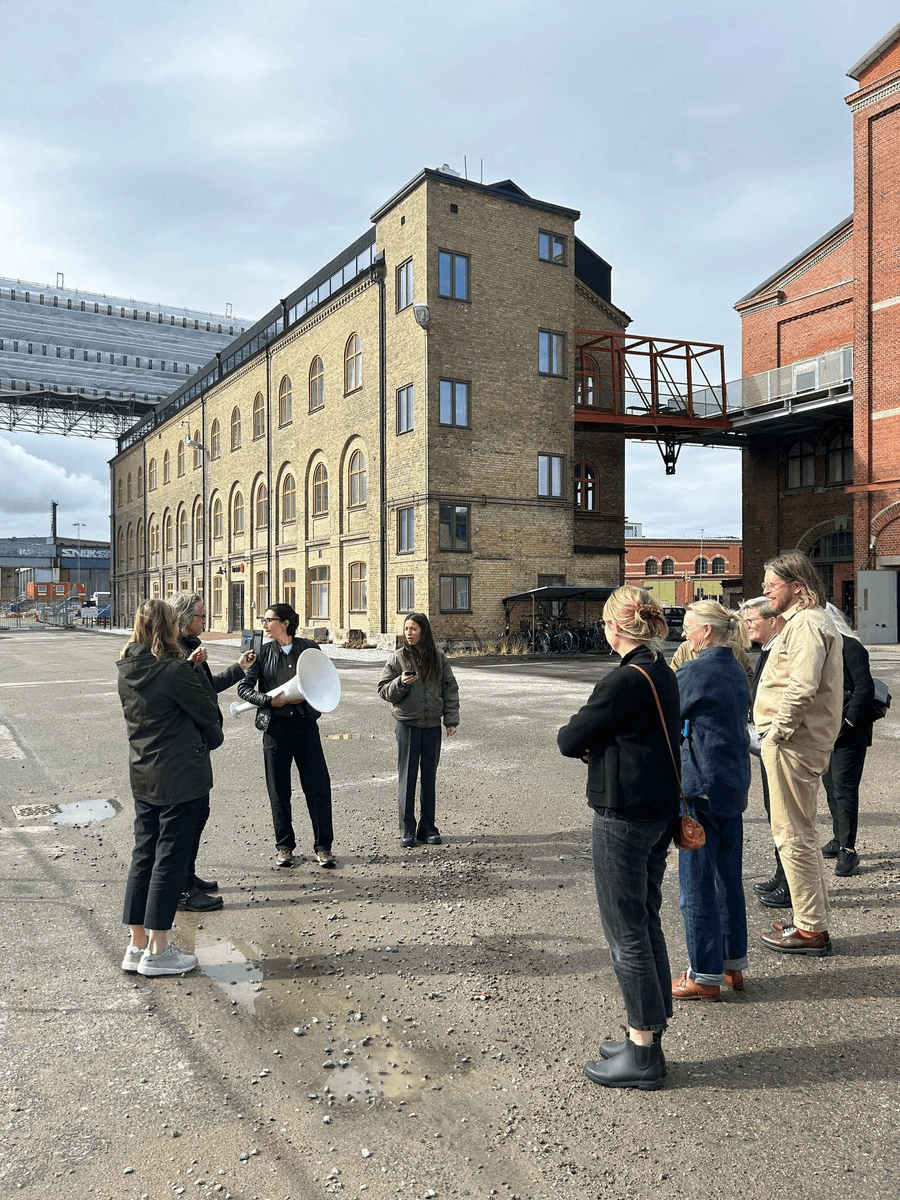
When a shipyard closes, what happens to everything left behind: the steel sheds, the brick walls, the cranes, the stairs and the windows? In Malmö, the answer is that most of it stays.
Varvsstaden, an 18-hectare site at the former Kockums shipyard close to Malmö city centre, is being redeveloped into a new district of around 2,500 homes and 4,000 workspaces, alongside schools and green space. The City of Malmö has steered the site since 2010, with the private company Varvsstaden AB, owned by Peab, acting as developer and contractor over a planned 25 year build out.
Instead of demolishing the site and starting from scratch, Varvsstaden keeps many of its most characterful industrial buildings in place, converting them for commercial, cultural and educational use. Where larger industrial sheds cannot be retained, they are carefully dismantled, and materials such as steel frames, bricks, windows, stairs and lamps are stored on site in a Material Bank. There, each item is catalogued for condition, structural properties and carbon footprint, so architects can design new buildings around what is already available. The project is working towards reusing or recycling 80 percent of materials from the site.
The development is guided not only by Malmö's statutory planning framework, but also by three non-binding orientation documents: the Urban Life Compass, the Aesthetic Compass and the Catalogue of Ideas. These set out shared principles for sustainability, design and material reuse, allowing the City and the developer to keep adapting the project as it progresses in phases over more than two decades.
For other cities working with former industrial or brownfield sites, Varvsstaden offers a practical example of combining long term statutory planning with more flexible and practical guidance documents, as well as the innovative system for cataloguing and reusing materials rather than treating them as waste.
A new USE case study looks in detail at how Varvsstaden's governance model and Material Bank work in practice, and what is involved in scaling material reuse beyond a single site.
Explore more USE case studies