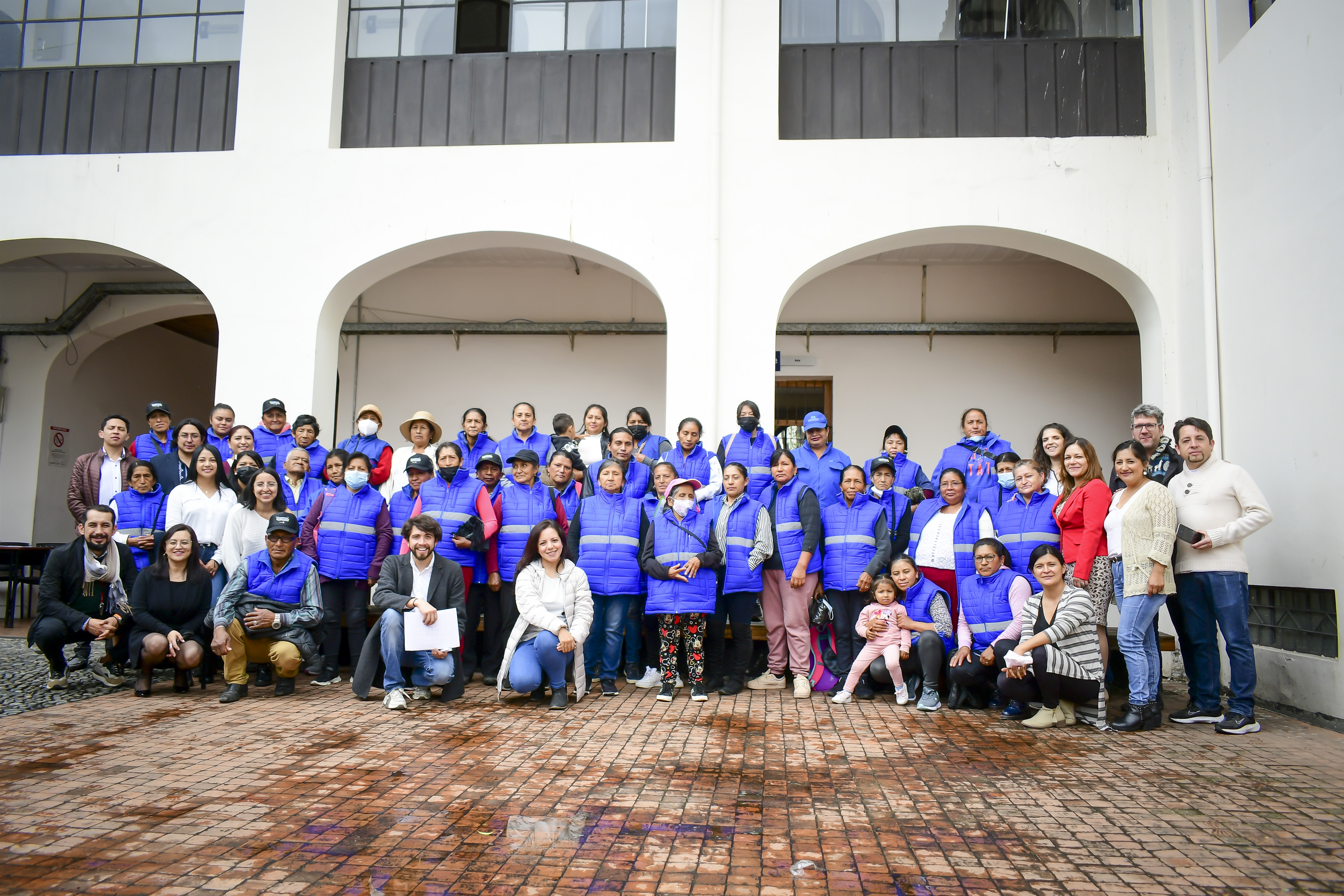
In Cuenca, the team used socioeconomic surveys, clinical tests, GPS tracking, travel diaries and mobile ethnography to understand how work, mobility, care responsibilities and public space affect recyclers’ daily lives. Ergonomic assessments also identified risks linked to repetitive movement, uncomfortable postures and heavy loads.
Crucially, recyclers were involved throughout the process. More than 100 municipal recyclers and technicians took part in four community workshops to validate findings and discuss health, labour rights and inclusive urbanism.
The project then moved into implementation. A health care strategy was developed for 40 waste pickers, more than 20 leaders were trained as environmental education agents, and a neighbourhood programme connected recyclers with more than 800 households. RUMBOS also supported the formalisation of COOPCOAMA, a recycling cooperative with female leadership, and strengthened the Cantonal Table for Inclusive Recycling as a forum for dialogue between recyclers, public authorities and private actors.
The case is useful for other cities because it links evidence with organisational development, public policy and practical urban interventions. Its lessons include treating recyclers as experts, adapting methods to local working conditions, and building inter-institutional capacity that can continue beyond a funded project.
The case study also points to a key challenge. After the project ended, the University of Cuenca no longer allocated specific funding to maintain several post-project actions, leaving continuity dependent on local organisations, municipal programmes and partners.
Visit the project organizer (UCUENCA) on social media: Facebook & Instagram