Heat waves are becoming a defining urban challenge, but cities are rising to meet it. From public libraries and parks to local pharmacies and shops, practical solutions are emerging that use what cities already have. USE looks at the case of Barcelona, and how the city designed a practical and economic response.
The Xarxa de Refugis Climàtics (Climate Shelter Network) provides free access to temperature-controlled spaces across the city: libraries, markets, pharmacies, civic centres, sports facilities, parks and local businesses. Venues must maintain indoor temperatures of no more than 26°C in summer and at least 21°C in winter. The network was launched in 2020 with 70 venues and has since grown to more than 500 shelters.
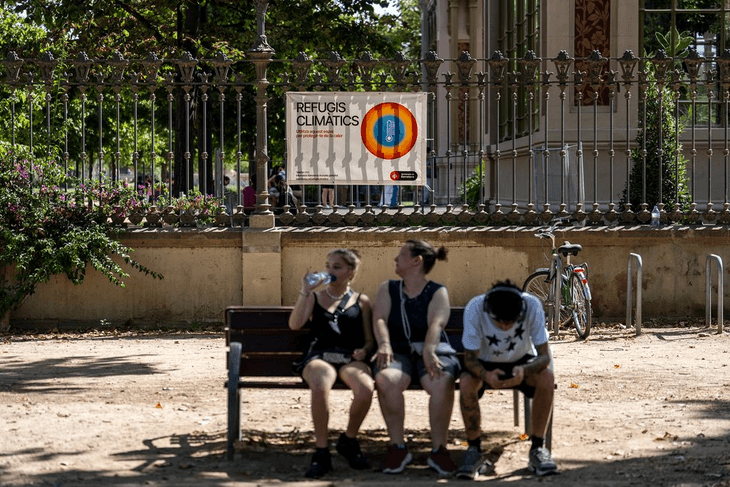 © Laura Guerrero, 2024. Parc de la Ciutadella. Licensed under CC BY-NC-ND 4.0.
The design puts vulnerable groups first. Participating venues are accessible, clearly signposted and open to all. Paper maps direct residents to nearby alternatives if a preferred shelter is temporarily closed.
Schools have been part of the response too. Between 2019 and 2022, a parallel initiative transformed school playgrounds, adding shade structures, water points, vegetation and building insulation improvements, funded in part by EUR 4 million from the EU's Urban Innovative Actions programme. Some of these spaces are now open to neighbourhood residents outside school hours, extending their benefit through the summer months when heat risk is highest.
One particularly transferable feature is the project's open-source map distribution tool, which sends updated shelter information directly to participating venues. Other cities looking to replicate the model can use it without building the system from scratch.
A new USE case study examines how Barcelona designed this network, its biggest successes and challenges and what other cities can learn from the experience - View the case study or explore more USE case studies.
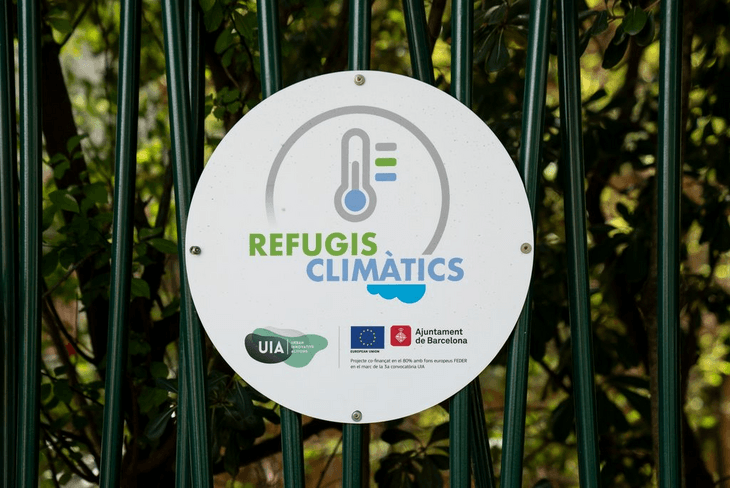 © Mariona Gil, 2022. Parc de la Ciutadella. Licensed under CC BY-NC-ND 4.0.