Barcelona (ciudad)
City Government
Whole City/Administrative Region
Ongoing since 2020
Barcelona has developed a citywide network of climate shelters to protect residents from extreme heat in summer and cold in winter by taking advantage of already existing public and private infrastructure. This project, Xarxa de Refugis Climàtics, started in 2020 with 70 climate shelters. Now, as of summer 2026, it has more than 500 participating venues.
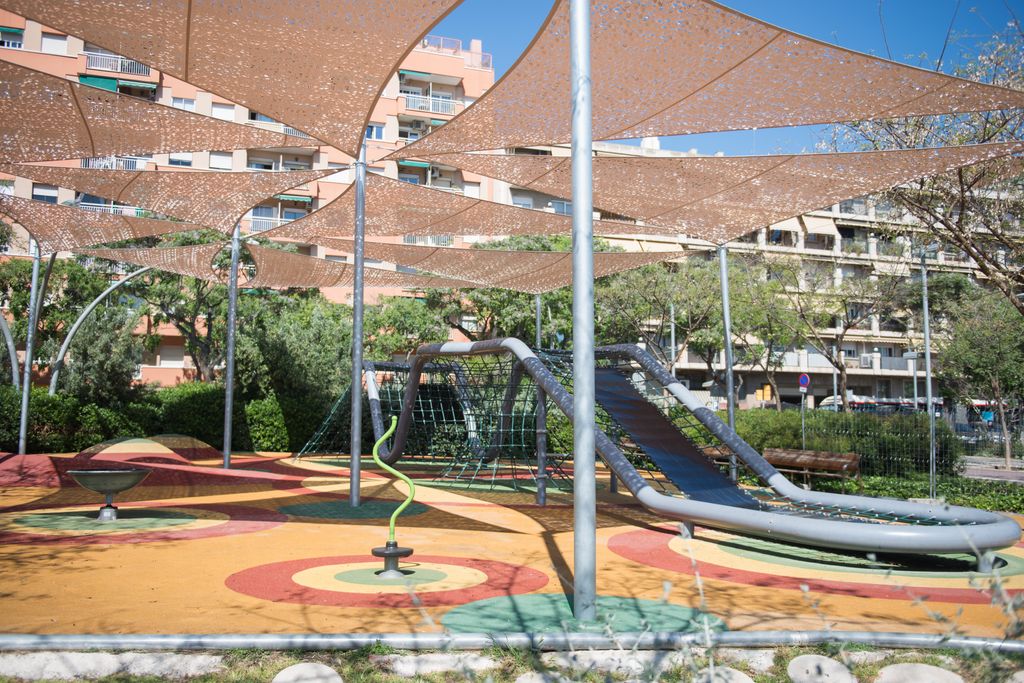
In response to rising temperatures and more frequent heat waves, Barcelona has created a network of climate shelters distributed across the city. These shelters include a wide range of typologies such as libraries, civic centres, sports facilities, museums, markets, parks, school playgrounds, and smaller micro-shelters in local establishments. The majority of shelters are existing facilities that maintain their usual functions while also serving as climate shelters. Most of them are open year-round and are designed to support thermal comfort, especially for groups at greater health risk: older people, babies, people with chronic illnesses and residents with limited resources. The network also includes school climate shelters, which besides keeping playgrounds open during the school holidays, improve these by incorporating more shaded areas and water fountains for children and their families to enjoy the summer in more comfort.
Background
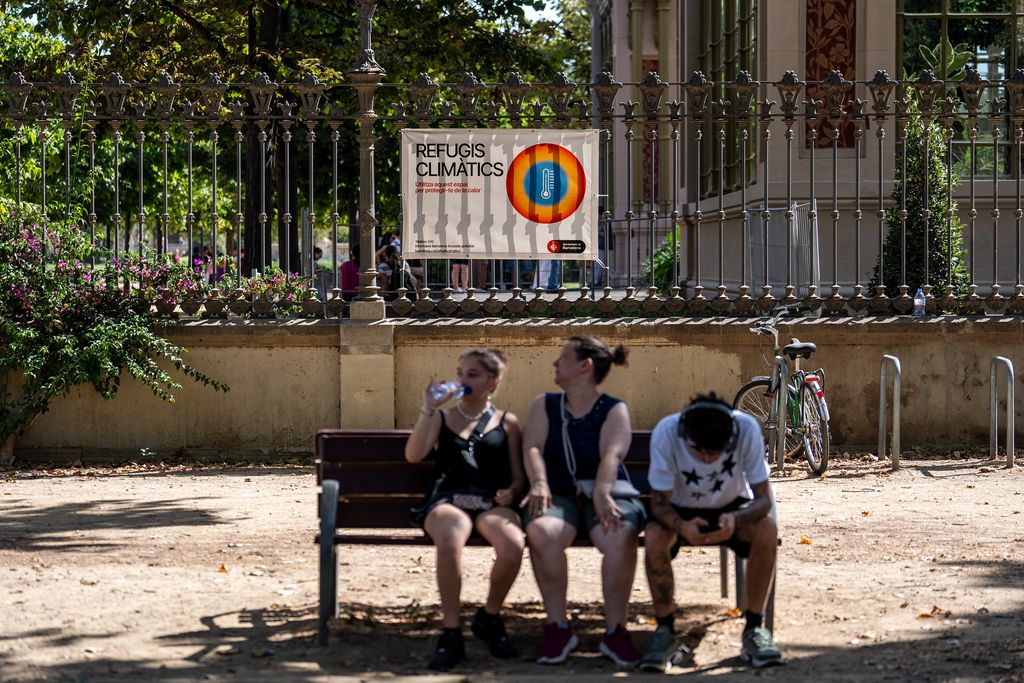
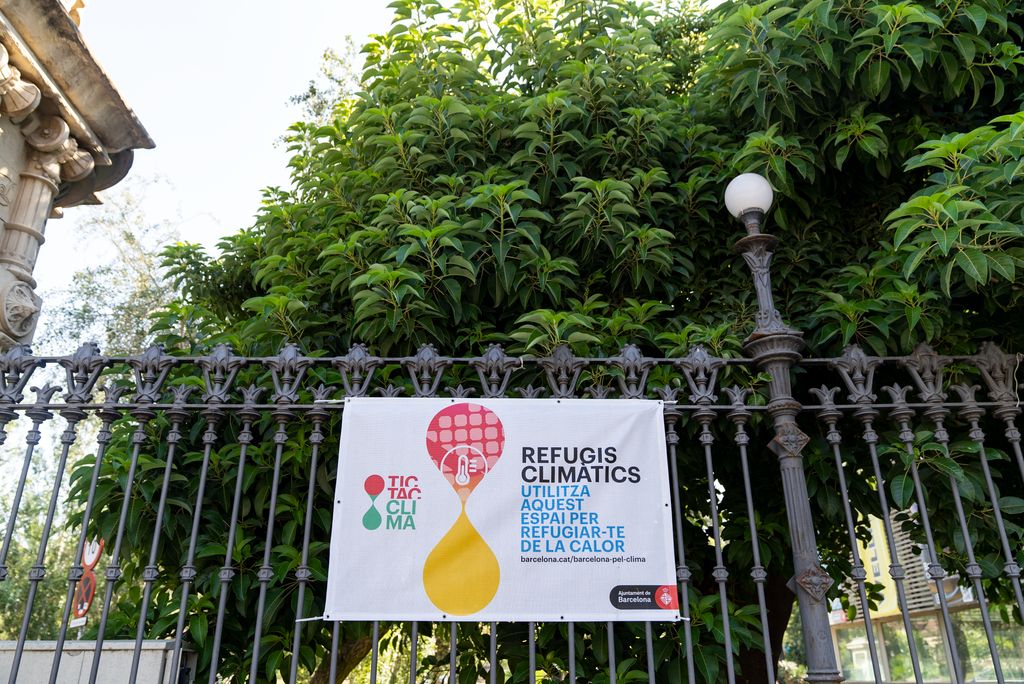
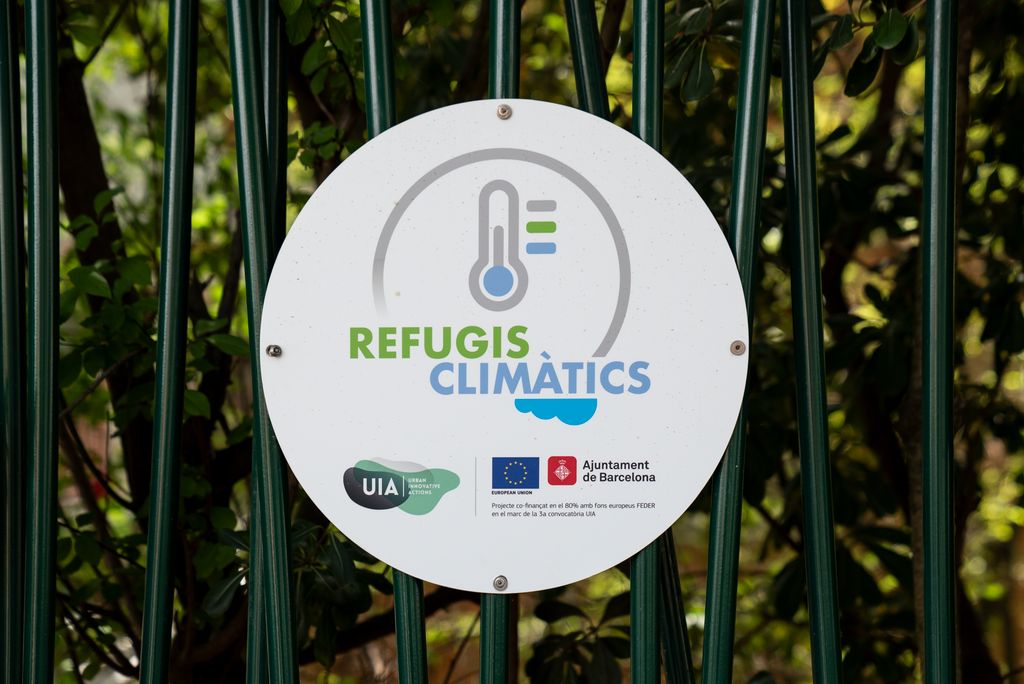
Like many cities around the world, Barcelona faces increasing climate risks. Particularly, more frequent and intense heat waves affect the physical and psychological health of its residents, especially those of more vulnerable groups. To improve this situation, the former city’s Climate Plan 2018-2030 proposed the creation of a network of “climate shelters” across the city that would provide free access to spaces with lower temperatures in the summer, and warmer temperatures in the winter. The shelters would consist of a variety of already existing public and private infrastructure, such as municipal facilities, shopping malls, pharmacies, cultural and sports centres, that due to their construction or the use of air conditioning could maintain the air temperature to at most 26°C (and 21°C in winter). The network also includes outdoor climate shelters, such as parks and gardens that provide thermal comfort through vegetation, shade and access to water. The residents are able to identify the participating establishments by posters and stickers on their entrances, while outdoor climate shelters, such as parks and gardens, are signposted with banners indicating the coolest areas within the space. In addition, paper maps showing the locations of nearby climate shelters are made available to help residents find alternative shelters in the vicinity
Objectives
This project was initially designed in 2018 and was incorporated on the former Barcelona’s Pla Clima – the Climate Plan for 2018-2030. A series of minimum requirements were defined for these spaces to be eligible such as being able to maintain a maximum temperature of 26°C during the summer, a minimum of 21°C in the winter, having chairs for people to sit on and at least 50sqm. This last requirement was mainly driven by the Covid-19 pandemic and has since been dropped to allow smaller spaces, called micro-shelters, to take part in the initiative.
Private establishments can apply to be incorporated into the network using a form available on the Network´s website. Once compliance with the minimum climate shelter requirements has been verified, the venue is incorporated into the network. Signage items, such as posters and stickers, as well as maps showing other shelters in the vicinity would then be sent to the participating businesses. A monitoring programme was also drawn up, visiting a selection of places to verify continued compliance with the minimum climate shelter requirements.
A web-map was also designed in the Network´s website and shows all the shelters in the city, categorized by type. The network is reviewed twice a year to define the summer and winter climate shelter networks, with the map updated accordingly. In addition, the map is updated on a weekly basis to incorporate newly registered shelters and to temporarily remove venues that are unavailable or do not currently meet the conditions required to operate as climate shelters.
Types of implementation measures
While climate adaptation measures were implemented in all participating schools, only a subset of them are incorporated into the Climate Shelter Network through the Open School Playgrounds Programme, which allows public access outside school hours.
When adapting schools to climate change, these measures have been implemented:
The school climate shelters project received funding through the European Commission’s Urban Innovative Actions programme, with an ERDF subsidy of EUR 4 million and additional city funding of more than EUR 1 million for implementation from 2019 to 2022. The broader Climate Shelter Network is coordinated by Barcelona City Council through its Climate Change and Sustainability Office, which works with designated contact persons at each participating venue, whether public or private, to ensure the proper operation and maintenance of the network.
The Barcelona City Council reports that the network currently includes more than 500 climate shelters in summer and more than 300 in winter. In the school project, adaptation works recovered around 1,000 square metres of natural ground with vegetation in school playgrounds, created 2,213 square metres of new shaded spaces, planted 74 trees and installed 26 new water points. [R2] The project also opened school playgrounds for broader community use and generated evidence on climate comfort, health and replicability.
The expansion of the network has substantially improved accessibility across the city: the share of residents living within a 10-minute walk of a climate shelter increased from 61% in 2020 to 99% in 2026, while coverage within a 5-minute walk rose from 20% to 77%. Accessibility during August Sundays, when many facilities are closed, has also improved considerably, with 92% of residents having access to a shelter within 10 minutes and 49% within 5 minutes by 2026. Overall, the results indicate a marked increase in both the number of shelters and the population coverage achieved by the network over time.
A key challenge in this project is having shelters open outside the usual business hours. Many establishments close during the weekend or even during holiday periods, in the end of July and August. Having shelters open during night hours is also an important challenge, as the temperatures at night do not decrease to a comfortable level during heat waves.
In terms of spatial coverage, the network has achieved a high level of accessibility, with more than 99% of residents living within a 10-minute walk of a climate shelter. Nevertheless, maintaining this coverage and continuing to reach areas with fewer available shelters remains an ongoing challenge as the network evolves.
As the Climate Shelter Network continues to expand, its coordination and management have become increasingly complex. The number of participating venues has grown substantially over time, requiring ongoing coordination with a large and diverse set of public and private facilities, regular updates to network information, monitoring of compliance with minimum requirements, and continuous communication with venue representatives.
Barcelona’s experience suggests that climate adaptation does not always require new, expensive infrastructure. [R1] It is also an example of the different solutions (green, blue and grey) for improving resilience and comfort in the city. [R2] The model is also easily transferable to other cities as it makes use of already existing public buildings, as well as local establishments that are happy to be featured in this network. The team behind the Climate Shelters has also made the code used for their printed maps open-source. This is a mailing system that sends updated maps to the participating venues with the neighbouring shelters for people to be informed of what is available in their surroundings and can be particularly useful if that shelter is closed, as these maps can be affixed to the entrance glass doors. This open-source initiative not only reduces costs for other cities that want to adopt a similar project but also contributes to their IT resilience.
Barcelona City Council. Climate Shelters Network.
Barcelona City Council. Climate shelters in schools.
Barcelona City Council / Info Barcelona. Barcelona's population stabilises at 1.7 million people.
Barcelona City Council. Municipal organisation.
Barcelona City Council. Where do the revenues come from?
Barcelona City Council / Barcelona International Welcome. Barcelona's economic growth consolidated.
Barcelona International Welcome. Barcelona in figures 2025.
The Map will be displayed after accepting cookie policy