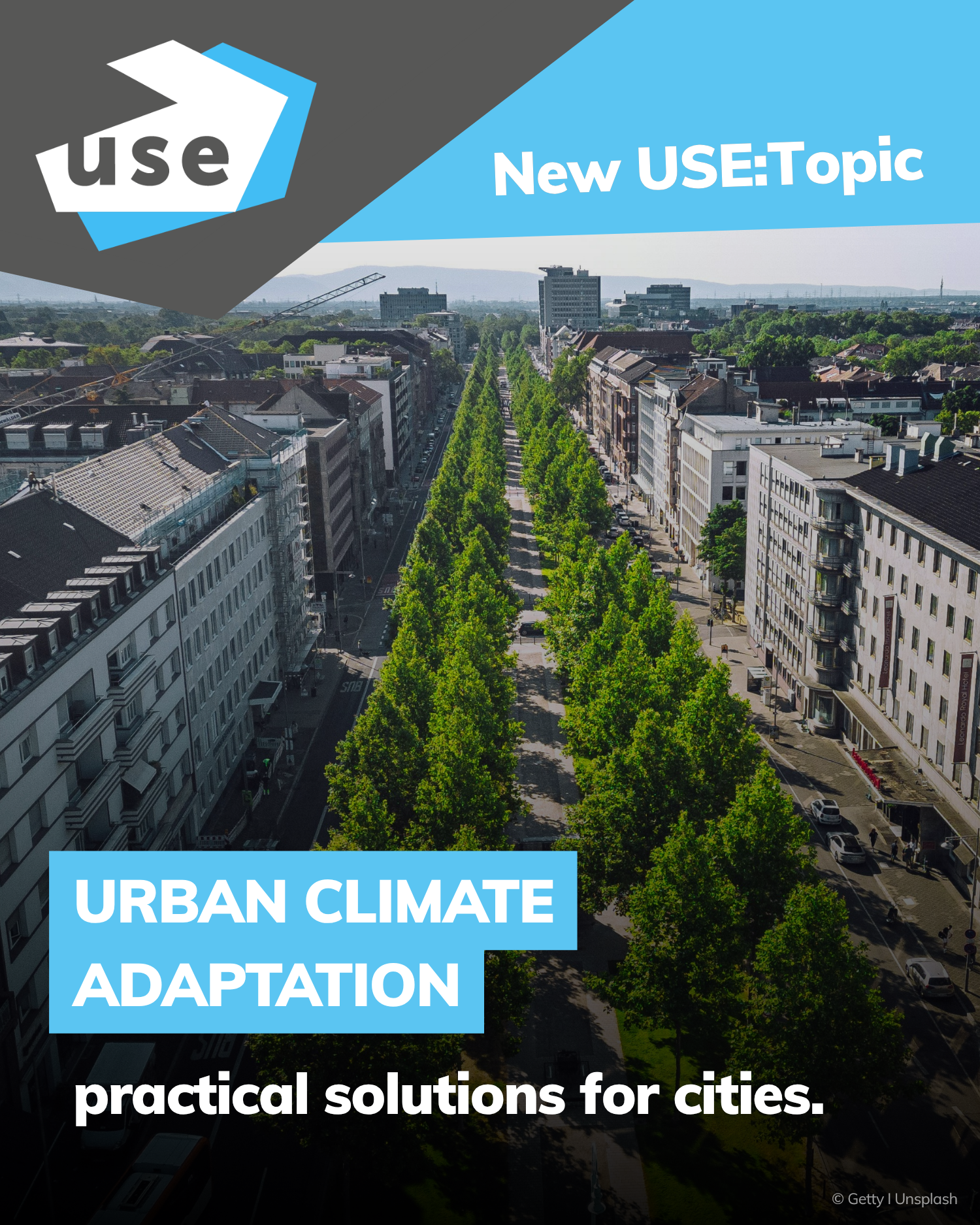
Over the next six months, USE will examine how cities can prepare for growing climate risks.
Many parts of Europe are currently experiencing severe heat. For cities, high temperatures are not only a weather issue. They affect public health, public spaces, energy systems and the people who are least able to protect themselves.
Extreme heat is also only one of the climate pressures facing cities. Heavy rainfall, flooding, drought and water scarcity are becoming increasingly important challenges for urban planning and governance.
USE Metropolis is therefore making urban climate adaptation its USE for the next six months.
Through case studies, interviews and editorial features, we will explore how cities are preparing for climate impacts and protecting their residents. Our coverage will include urban heat resilience, sponge city approaches, green and blue infrastructure, health protection and climate-resilient planning.
We will look beyond the final results of successful projects. What made implementation possible? Which political, financial and technical obstacles had to be overcome? What can other cities learn from the experience?
Cities are already developing practical responses. They are creating shaded public spaces, planting trees, redesigning streets, managing rainwater differently and developing plans to protect people during periods of extreme heat.
USE will bring these experiences together and connect them with the people behind the work. The goal is to make effective approaches more visible and help Citymakers understand how they could be adapted to different urban contexts.
Do you know a strong example of urban climate adaptation? Are you involved in a project, policy or initiative that could help other cities?
Share your experience with the USE community and contribute to the new USE.