Increasing levels of gender violence perpetrated against women and girls in metropolises around the world requires all levels of government to work together to realise SDG5: achieve gender equality and empower all women and girls and SDG11: Make cities and human settlements inclusive, safe, resilient and sustainable.
use:news
Safety and public space: Mapping metropolitan gender policies
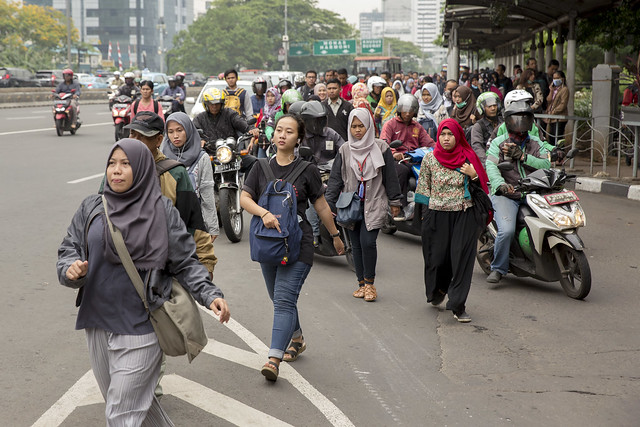
Metropolitan governments can play a significant role in achieving SDG5 and SDG11 by adopting policies and programs that promote gender inclusion. Key to this, is the participation of women and girls in the planning and decision-making process to provide an equal Right to the City and the same economic, social and educational opportunities.
The publication “Safety and public space: Mapping metropolitan gender policies”, commissioned by Metropolis, addresses the lack of safety that women and girls face in public space and presents the findings on the leadership metropolitan governments are taking to proactively respond to these concerns in their metropolitan areas. Policy assessments were carried out by mapping initiatives, strategies and instruments of the 136 member cities. The research analysed 83 policies, strategies and instruments focus on the safety of women and girls, and that aim to foster safe and accessible streets, squares, parks, neighbourhoods and other public spaces. The methods applied to collect information included desk research, questionnaires, face-to-face exchanges and personal correspondence by email.
Metropolis Secretary General, Octavi de la Varga, stated in the publication’s foreword.
“This report addresses the lack of safety that women and girls face in public spaces and presents the findings of a review of the policies and programmes that metropolitan governments have established to proactively respond to these concerns”.
The use platform hosts a number of case studies demonstrating programmes being implemented at the local level to make SDG5 a reality.
Examples include:
Using SafetiPin to build safer cities for women in Bogota
Vienna gender-sensitive park design
Cities need to collaborate and learn from each other’s strengths and weaknesses, positive outcomes and failures. If your city has a programme dedicated to SDG5 that you would like to share with other citymakers you can upload it to the use platform via this link.