Sustainable Development Goals
Paris
Local Government, City Government
Inner City
Ongoing since 2012
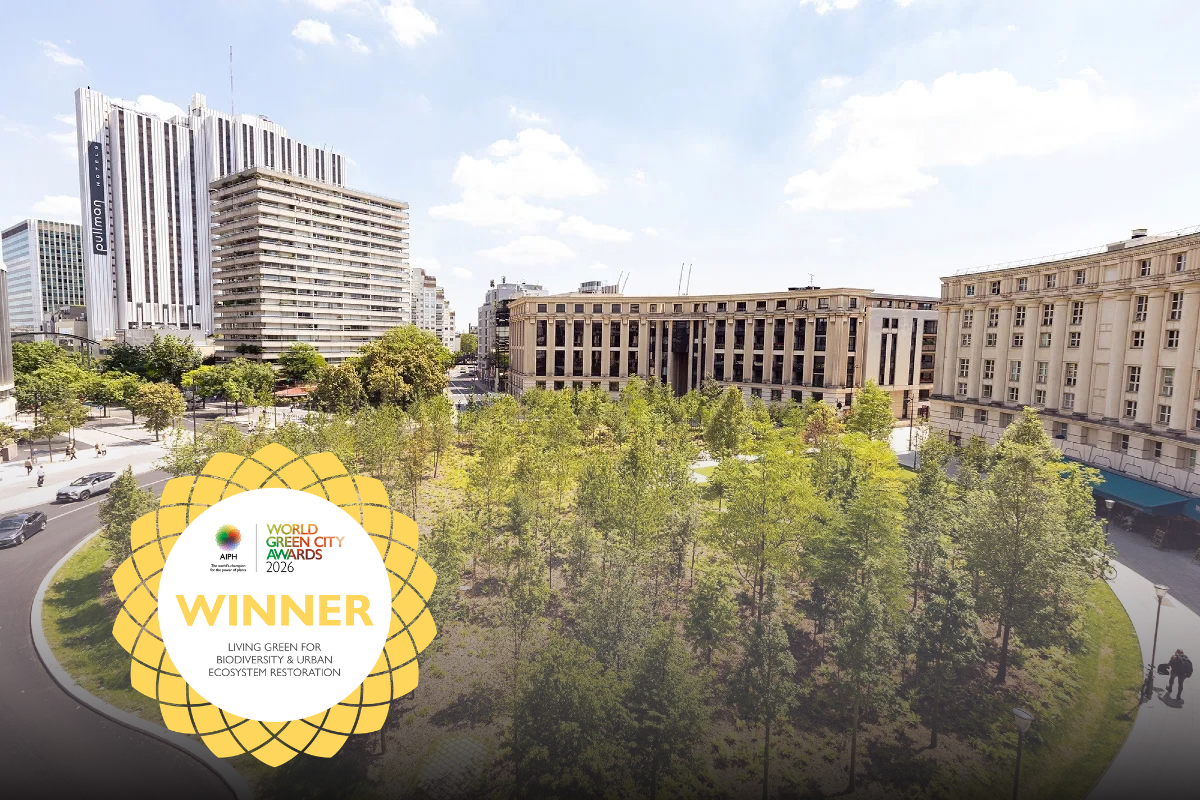
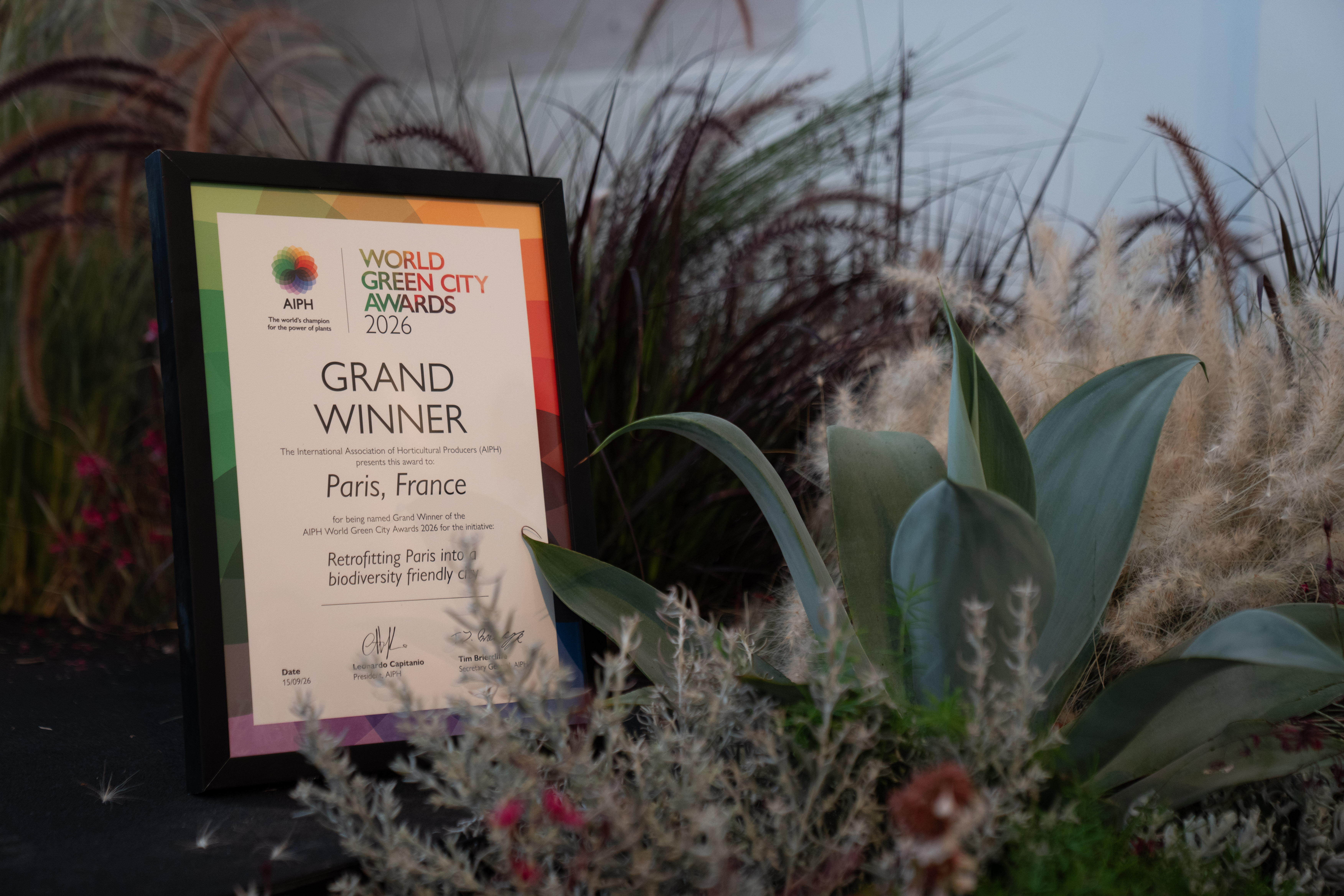
Winner of the AIPH World Green City Awards, Paris is tackling urban heat, biodiversity loss and flooding risk by treating nature as part of the city's core infrastructure, embedding it into planning rules, built surfaces and everyday life for residents.
Since 2012, Paris has pursued this through a combination of regulation, built infrastructure and citizen engagement. The 2024 Bioclimatic Local Urban Master Plan now requires mandatory biodiversity assessments for new developments, ensuring ecological impact is considered from the early planning stages. For the already built infrasctructure, the city has developed 138 hectares of green roofs and walls since 2018, turning underused surfaces into habitat and insulation. A zero-pesticide policy, in place since 2009, protects the ecological quality of green spaces across the city. Alongside these top-down measures, citizen programmes such as Copr'Oasis and Sparrow Quarters give residents and co-owned buildings the tools and funding to restore habitats and permeability at the neighbourhood level.
Paris faces the challenge of reintroducing nature into a dense and largely built-up urban environment. Limited space for new green areas, rising temperatures, longer and more frequent heatwaves, air pollution, flooding risks and biodiversity loss are placing pressure on urban ecosystems and human wellbeing.
The decline of the sparrow population in Paris, reported as 70 per cent over the past 20 years, illustrates the wider deterioration of urban habitats. The loss of biodiversity also threatens ecosystem services such as pollination, air purification and water regulation. Neighbourhoods with little vegetation are more exposed to heat, poor air quality and limited opportunities for social interaction and mental restoration.
Paris's response is based on the principle that biodiversity and vegetation should be treated as structural elements of the city rather than as decoration. The main objectives are to:
The Paris Rain Plan, ParisPluie, revised in 2025, sets out an objective of restoring soil permeability across at least 55 per cent of the city's territory by 2050 (40% non-permeable soils and 15% disconnected from the sewer system).
Planning and regulation
The 2024 Bioclimatic Local Urban Master Plan integrates ecological corridors, known as Les Chemins de la nature, and expands the city's protected green infrastructure. The plan adds 90 hectares to the category of “Protected Green Spaces” and introduces categories such as “Protected Trees” and “Protected Open Spaces” to be vegetated.
The Orientation for Planning and Programming on Biodiversity and Climate Adaptation applies to new developments and, where feasible, existing buildings. Project owners are expected to conduct a pre-construction ecological assessment covering existing vegetation, habitats and site vulnerabilities. Developers can use the BiodivScore throughout the planning, construction and project management phases to avoid, reduce and offset biodiversity impacts.
Projects must demonstrate how they will preserve and enhance biodiversity, integrate permeable soils and minimise soil sealing. Where residual impacts cannot be avoided, compensatory measures are required. Building permits are reviewed by the Green Spaces and Environment Department, which assesses around 600 urban planning applications each year and provides recommendations to improve their ecological quality and compliance with the Urban Master Plan.
Greening buildings and public space
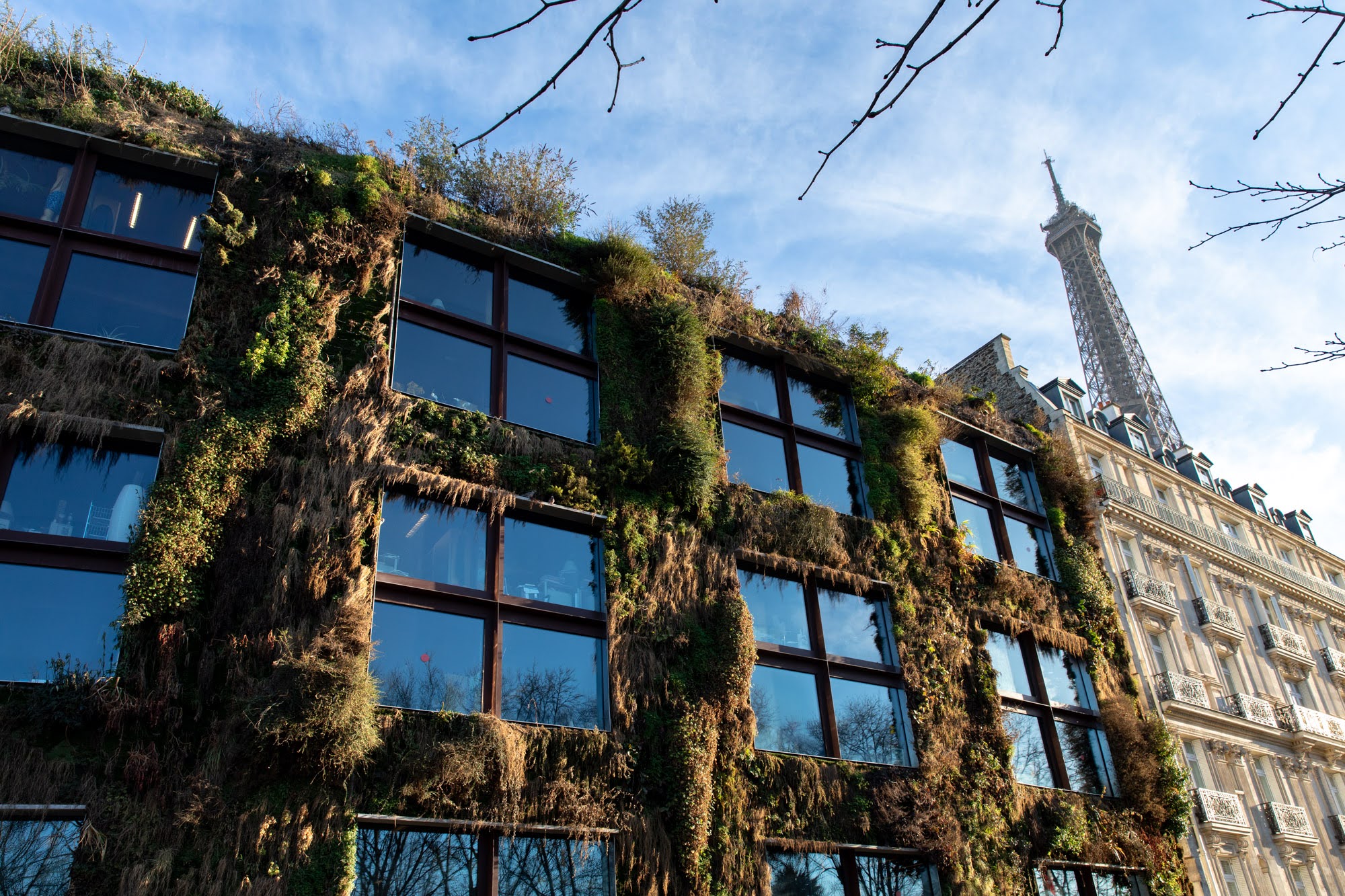
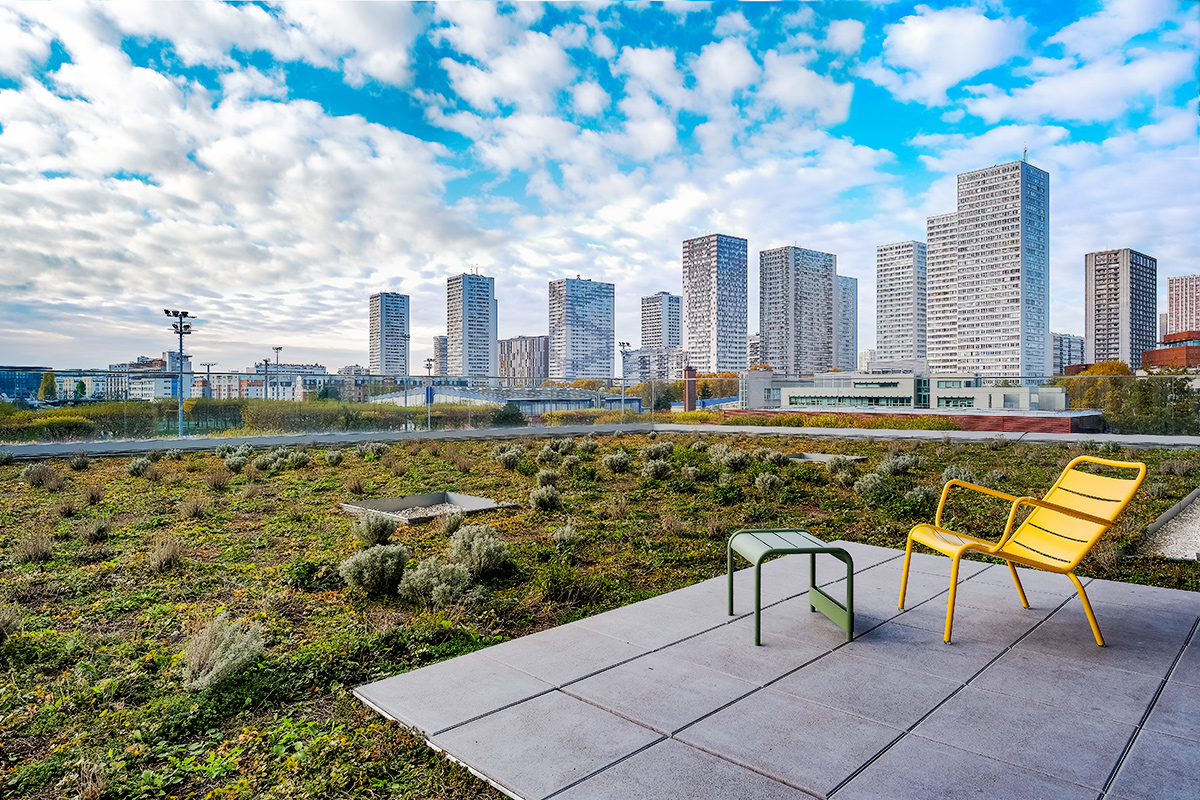
Paris is using roofs, façades and courtyards as ecological surfaces. Since 2018, 138 hectares of vegetated roofs and walls have been developed, providing habitat while contributing to insulation and stormwater retention. The target of 150 hectares of vegetated roofs, walls and courtyards for 2026 was reportedly reached early, in 2025.
Under the Bioclimatic Local Urban Master Plan, 300 additional hectares of green space open to the public are planned by 2040. They comprise new parks of course, but in limited quantity since the city is already fully build and space is scarce. To reach 300 new hectares open to the public, the City will act on all fronts: opening new parks, greening public space but also negotiating the opening of private spaces to the public. Since 2020, 21 hectares of green space have been created. Protecting the already existing green infrastructure is also essential, and that is why a total of 327 hectares of green space has been permanently protected through the Bioclimatic Urban Master Plan, alongside street trees and heritage trees.
The James Baldwin Library illustrates how biodiversity can be integrated into architecture. The project includes 90 per cent native species, 700 m² of green roofs and 65 per cent permeable soil. Other projects, including the Germaine Tillon swimming pool, have integrated permeable soils, native plant palettes and habitats for wildlife from the outset.
The city also applies low-tech Nature-based Solutions. These include rain gardens, swales, permeable pavements, vegetated parking surfaces, planted containers, green roofs, green façades and de-paved courtyards. The Life Adsorb project uses phytoremediation to clean stormwater from the ring road to preserve the quality of the river Seine.
Ecological management
Paris adopted a zero-pesticide approach early. Chemical pesticides were banned in green spaces management in 2009, and in city cemeteries in 2015. Green spaces are managed through differentiated maintenance adapted to the ecological context of each site. 91% of city parks and gardens are certified for ecomanagement through the “Ecojardin” label.
Management measures include eco-grazing, mulching, the creation of ponds, woodpiles, dry-stone walls and nesting sites, and the use of composted green waste and recycled soil substrates. These practices reduce mechanical work, retain moisture, support habitats and improve rainwater infiltration.
The city is also revising plant production practices in its horticultural centres. The stated direction is to prioritise native and climate-resilient species suited to future conditions.
Citizen participation
The Copr’Oasis programme provides technical and financial support for co-owned buildings. Eligible measures include courtyard unsealing, green roofs and façades, and rainwater harvesting. The programme provides €5,000 for preliminary studies and can cover up to 80 per cent of greening costs.
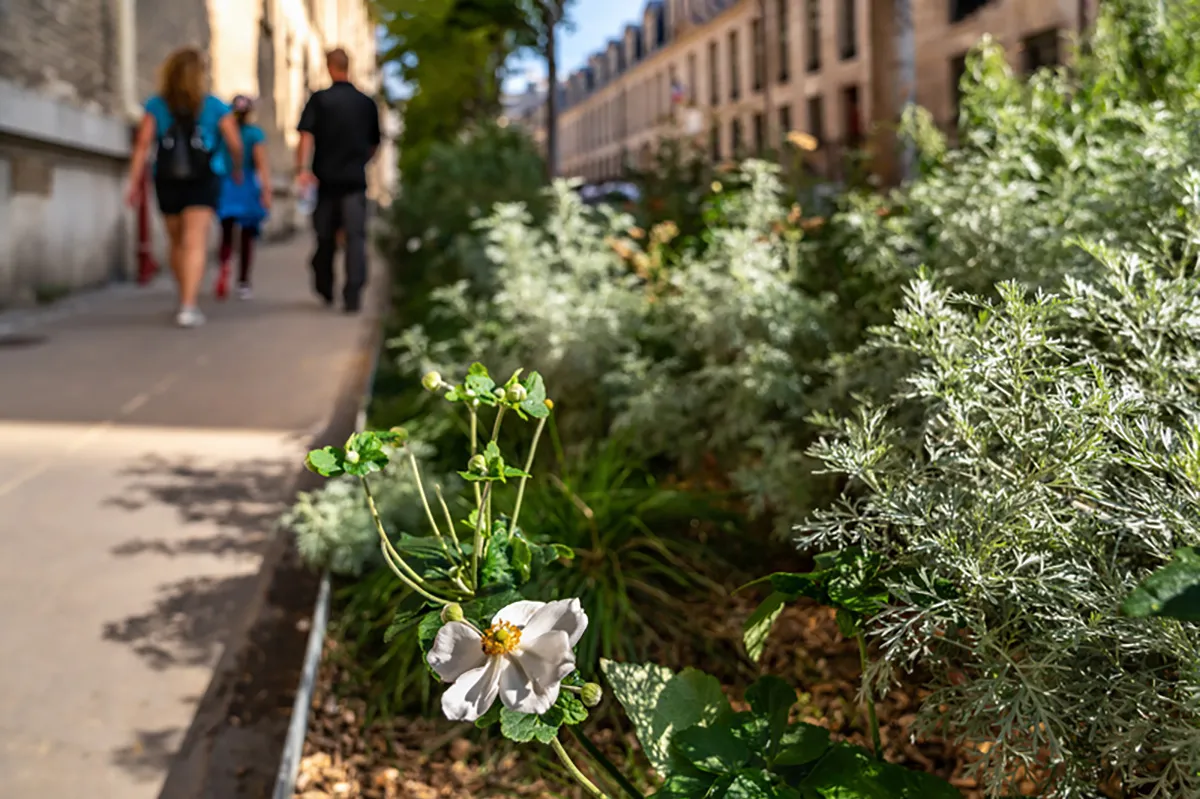
Through Paris Jardine, residents can obtain permits to green sidewalks and tree pits and to create community gardens. Residents are encouraged to plant native species that support local fauna.
The Sparrow Quarters programme, developed with the Ligue pour la Protection des Oiseaux (Birds Protection League), creates favourable nesting sites and habitats. Residents can plant seed-bearing species on balconies, terraces and in courtyards, install nesting boxes and contribute to citizen science surveys.
Water and resource management
Paris is working towards a sponge city model by combining permeable soils, rain gardens, green roofs, rainwater recovery and reclaimed water. The city operates two water circuits, one for fresh water and one for non-potable water, which is used extensively in green spaces.
The ParisPluie Plan embeds water-sensitive planning in construction projects and requires water management to be considered at the permitting stage. The city promotes local resource cycles, including the use of composted green waste and recycled soil substrates, to reduce the need to import topsoil and limit transport impacts.
The initiative is supported by municipal budgets, external co-funding, participatory budgeting, dedicated subsidies, public procurement requirements and innovative financing instruments.
The Department of Green Spaces and Environment employs more than 3,000 staff involved in designing, procuring, managing, maintaining and expanding nature in the city.
Since 2021, neighborhood revitalization efforts have received €93 million in funding under the “Embellir Votre Quartier” initiative. This initiative, which combines the renovation and greening of streets with the creation of new bike lanes, is carried out in consultation with district city halls and residents to carefully define the scope of work to be carried out in each neighborhood.
In addition, greening initiatives and the creation of tranquil urban spaces, such as school streets, received more than 400 M€ over 2020-2026, as well as the “30 hectares of additional green spaces” program and the greening of Paris’s major thoroughfares, the planting of 150,000 trees, the continued development of the Petite Ceinture green corridor, the creation of new “oasis” courtyards, the improvement of school surroundings to provide greater safety and tranquility for families.
Between 2018 and 2022, the Oasis schoolyards programme received €37 million, including €13.2 million in external co-funding from the Seine-Normandie Water Agency, the French National State and the European Union. During the same period, the Participatory Budget financed 322 nature-related projects worth more than €11 million.
Copr’Oasis provides financial support to co-owned buildings, including €5,000 for preliminary studies and up to 80 per cent of greening costs. In 2022, 42.5 per cent of city contracts included biodiversity-related execution clauses or selection criteria.
The Paris & Greater Paris Carbon Cooperative channels local actors' investments into urban projects that combine carbon offsetting and biodiversity benefits. The city is also designing a local “Nature in the City” label for projects not covered by existing national or international schemes.
Paris reports progress across biodiversity, climate adaptation, water management, public space and citizen participation.
Green infrastructure and biodiversity
Trees and habitats
Climate, health and water benefits
Paris shows that vegetation and Nature-based Solutions are measures that can reduce urban temperatures, store carbon, support stormwater retention, improve infiltration, filter pollutants and contribute to mental wellbeing. Vegetation can reduce urban temperatures by 2.5 to 3°C on average and tree canopy can lower temperatures by up to 8°C during heatwaves.
The city aims to improve soil permeability and water retention through the Paris Rain Plan. Green roofs, façades, rain gardens, permeable surfaces and planted areas contribute to this objective.
Paris monitors biodiversity and urban nature through the Singapore Index on Cities' Biodiversity, the Urban Nature Index, the Observatory for Ecological and Social Transition, annual reporting on the Tree Plan and Biodiversity Plan, open data indicators and a planned biodiversity footprint methodology.
Paris is attempting to reintroduce nature into a dense historic city where land is limited and public space must accommodate housing, mobility, infrastructure and social uses. This creates potential conflicts between different uses of land and makes the creation of new green space complex.
The initiative also requires coordination across municipal departments and professional disciplines. Green spaces, water management, streets and mobility, planning, public health, architecture, landscape design and biodiversity expertise must be brought together in project development and implementation.
For example, projects to create new planted areas or depave public space may require trade-offs with parking, traffic circulation, underground utilities or other competing uses of limited public land. Administrative complexity is another implementation barrier. Large greening projects often involve multiple municipal departments, public operators and external stakeholders, requiring extensive coordination, technical studies and permitting procedures. Aligning objectives, budgets and timelines across sectors can extend project development phases.
Public acceptance can also be a challenge. Changes to streets, squares or local spaces may generate concerns from residents, businesses or users regarding accessibility, maintenance, safety, parking removal or changes in urban character. Paris addresses these issues through consultation processes, pilot projects and clear communication on environmental and social benefits.
A further challenge is maintaining ecological quality over time. Green spaces, roofs, façades and habitats require suitable species selection, resource-efficient maintenance, monitoring and, in some cases, long-term protection. The city is addressing these challenges through regulatory requirements, ecological assessments, dedicated staff, differentiated maintenance, climate-resilient planting, public procurement criteria and cross-departmental collaboration.
Paris's experience suggests that biodiversity can be integrated into a dense city when it is addressed through several complementary levers rather than a single project or measure.
Key lessons indicated by the case study include:
The approach is potentially relevant to other dense cities seeking to retrofit existing urban areas. Its transferability depends on adapting the regulatory framework, financing model, species selection, maintenance practices, water systems and participation formats to local conditions.
Paris shares its experience through C40, Eurocities, ICLEI, international climate and biodiversity conferences, the IUCN Urban Alliance and the UNP+ Horizon Europe project, in which Paris is a lighthouse city. The Pariculteurs programme has also been extended beyond Paris in partnership with Seine-Saint-Denis and the Métropole du Grand Paris.
From Paris perspective, 3 key things to keep in mind:
The Map will be displayed after accepting cookie policy