Sustainable Development Goals
Huế
Local Government
Inner City
2019 - 2027
For centuries, Huế's historic parks, waterways, garden houses and lakes have unknowingly worked as nature-based solutions to a flood and heat-prone area. They shaped a city where urban life and nature developed in harmony rather than in competition. GreenCityLabHuế builds directly on this legacy, exploring how the same principle can be revived and modernised to meet 21st-century pressures: climate change, rapid urbanisation and population growth.
Working with researchers, decision-makers and citizens, the project analysed Huế's existing green-blue infrastructure and modelled how interventions such as tree planting, green façades and vegetated strips could cool the city and improve outdoor comfort. The project tested this on the ground through small-scale pilot projects and showed that meaningful nature-based interventions are achievable even with limited land and budget.
The project provides a vision for the city with guidelines for future green-blue infrastructure development, positioning Huế as a study case of how good planning practices can also come from examples of the past.
Urban areas play a central role in both climate mitigation and adaptation: they concentrate population and infrastructure, making them highly exposed to climate impacts, while their high greenhouse gas emissions also make them significant contributors to climate change.
According to several indices, Vietnam is among the countries most affected by extreme weather events and remains vulnerable to climate change impacts, particularly in low-lying and coastal regions such as Central Vietnam. The city's historic centre was built on the former floodplain of the Huong River, with parts of the city lying only 1.8 to 3.5 metres above sea level, with areas below two metres flooding regularly. The surrounding region of Thua Thien Huế is considered the most flood prone province in Vietnam, while at the same time suffering from heatwaves and storms. Climate models project further temperature increases (up to roughly 1.1 to 3.3 degrees Celsius by 2070, depending on the scenario) and rising total rainfall.
Given these pressures, the GreenCityLabHuế works to determine the potential of nature based solutions for climate adaptation, climate mitigation and additional ecosystem services in Huế, and to develop concrete and feasible urban development solutions together with local stakeholders.
The project combined analytical, participatory and demonstrative components:
In 2020 a status quo assessment was performed, where land-use data was analysed to map the existing distribution of green and blue infrastructure across Huế, covering forest, farmland, aquaculture, public green space, cemeteries, sports facilities and former landfill sites. An important part of this was the documentation of important local assets, such as Huế's traditional garden houses and the green spaces of former French colonial properties as distinctive, high biodiversity urban green assets that are being lost to modernisation and redevelopment pressure.
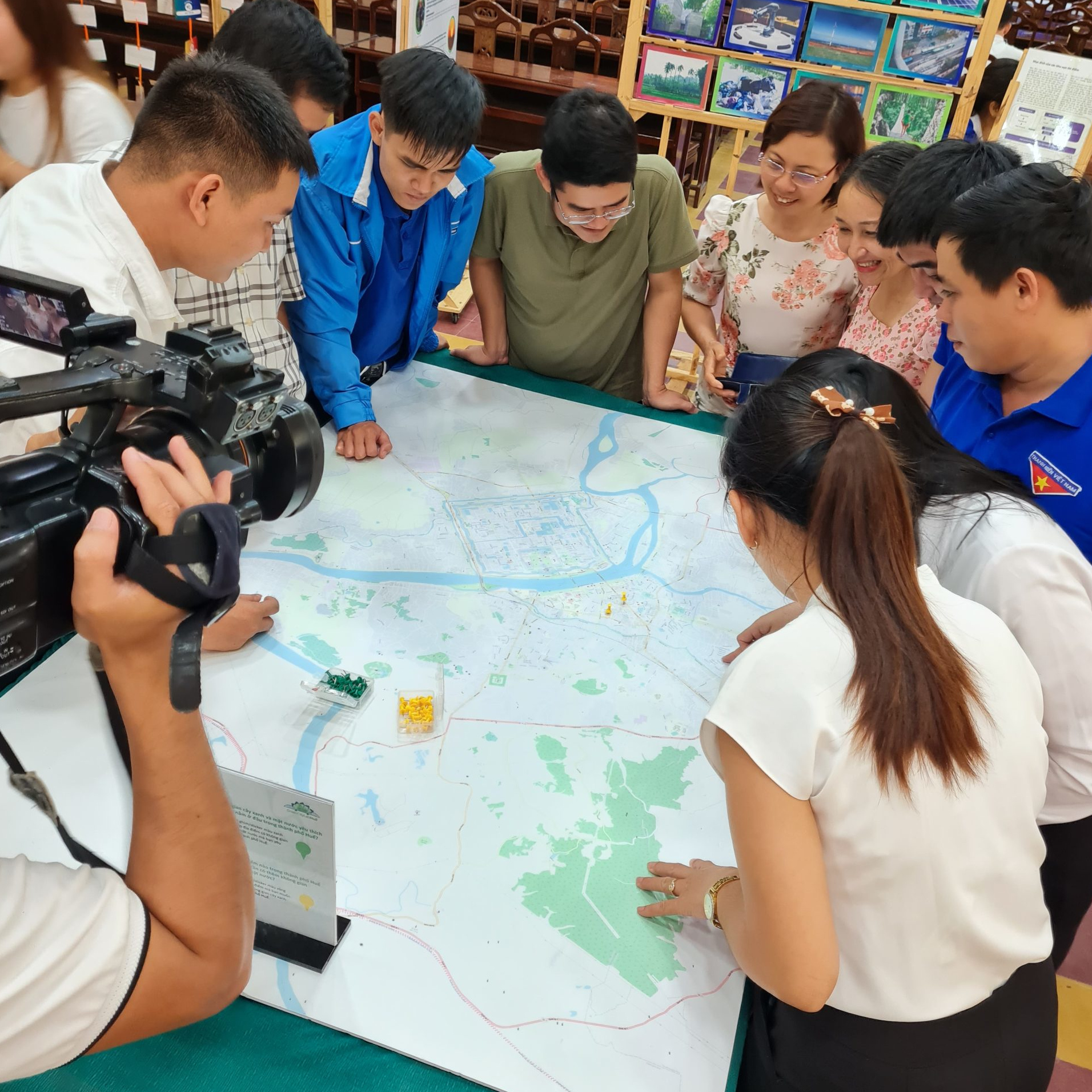
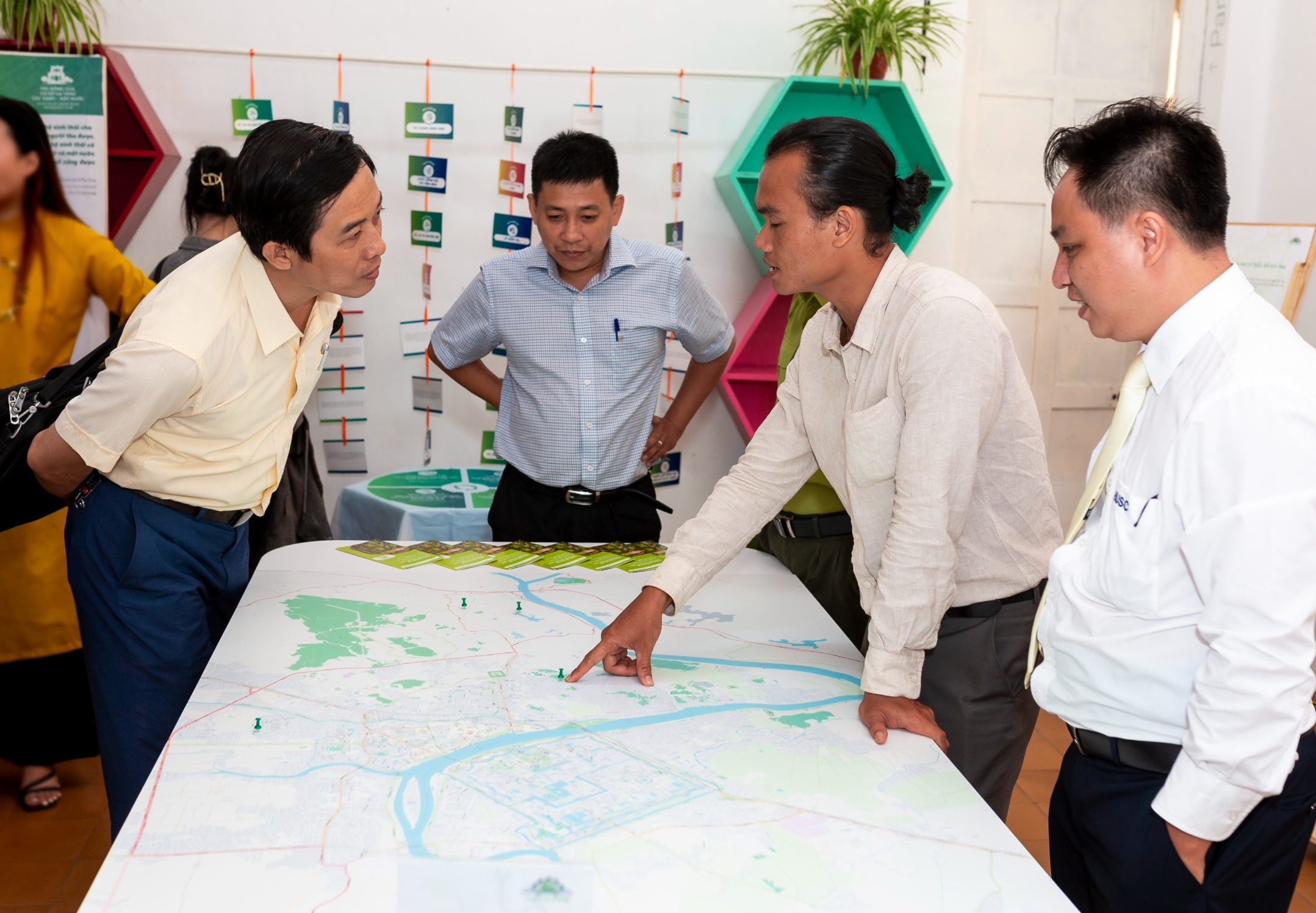
Building on this preparatory phase, the project held public participation events with experts and citizens, including policy roundtables in 2023 and 2024 where several scenarios for the future development of green and blue infrastructure were presented and discussed.
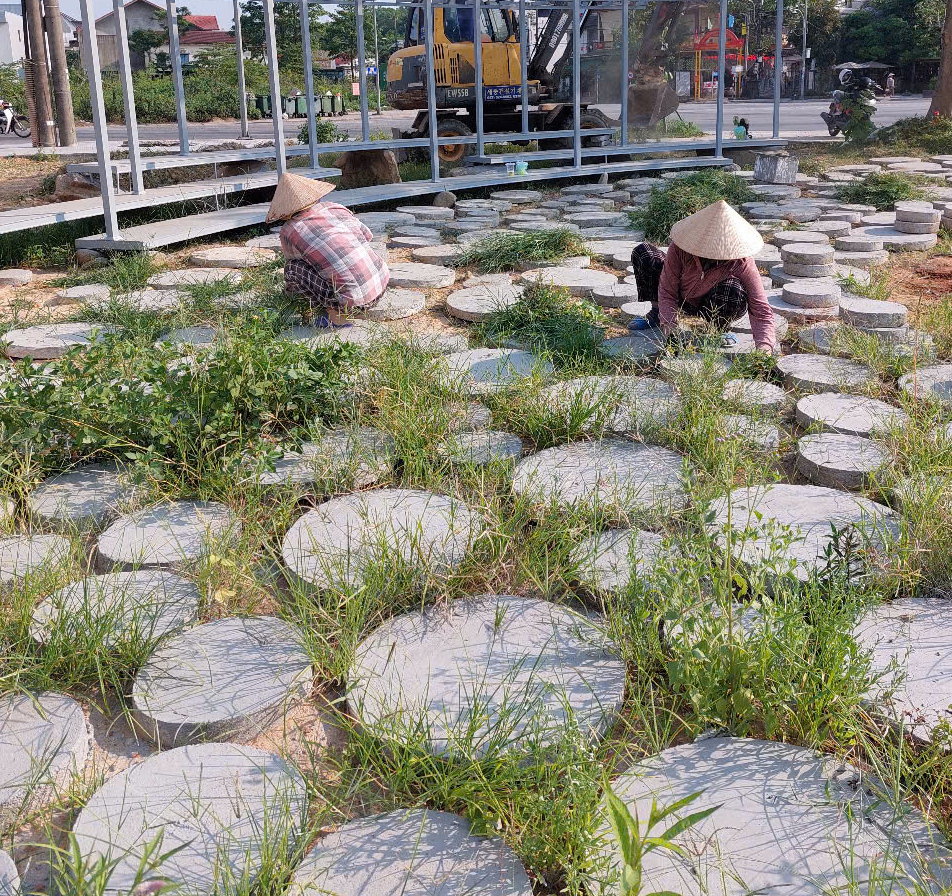
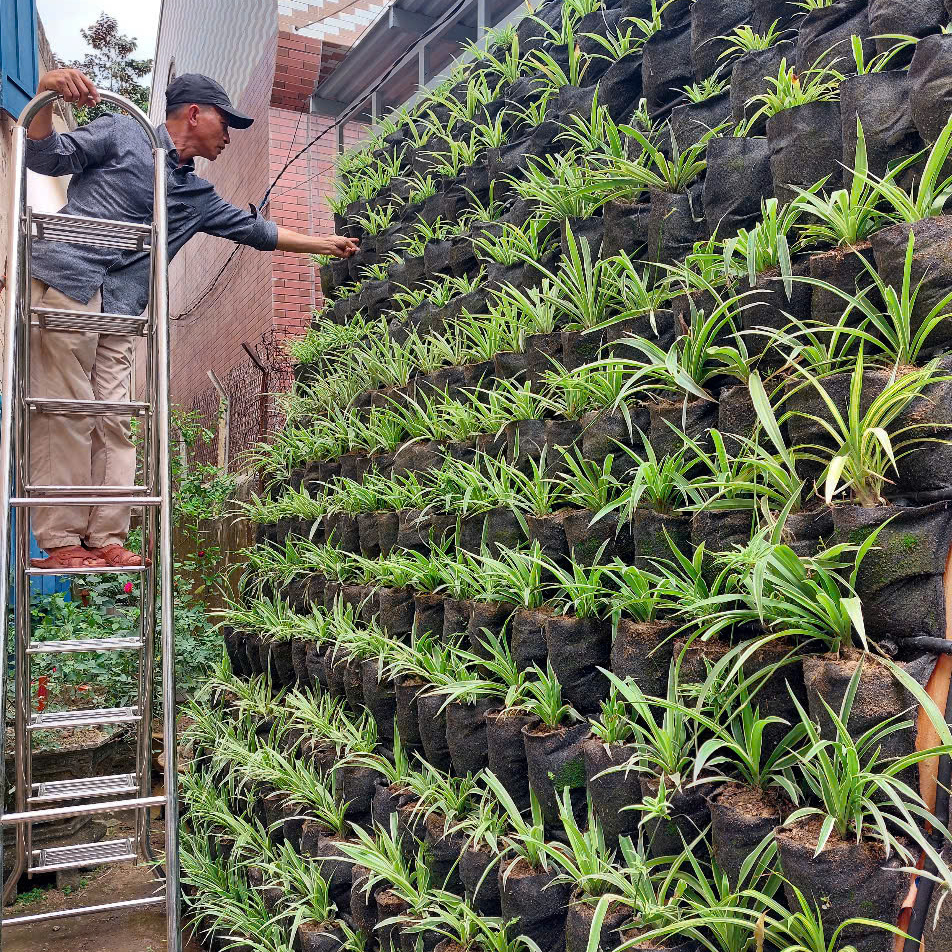
The first physical NbS showcases followed from 2024 onward, developed through a design competition with students and civil society representatives. They included the greening of a roof and façade on a cultural centre in Phú Hội, vertical garden elements at a schoolyard in An Đông, the upgrading of an existing public green space, and the conversion of a small riverside brownfield site into public green space. These small-scale, partly temporary interventions served as a testing ground for implementing NbS under local conditions in Huế. Among other things, they were used to increase the capacity of local stakeholders and urban planners. The project also launched a public Story Map so citizens can explore Huế's green and blue spaces online.
All these implementations were made to be aligned with the existing city level planning, such as Huế's 2016 city master plan and its 2030 targets for public green spaces per resident and the development of a new low-density “green district”.
Building on the insights gained during the research and development phase regarding the implementation of nature-based solutions as small-scale climate adaptation measures, the current implementation phase is driving forward the long-term establishment of nature-based solutions on two sites in the city of Huế.
This is taking place as part of a co-creation process in which detailed landscape architecture plans for the respective sites are being developed in collaboration with residents and stakeholders, with the involvement of a landscape architecture firm. These plans will subsequently be implemented by local stakeholders and are intended to make a long-term contribution to climate adaptation at both sites, as well as serving as inspiration and a blueprint for further similar projects in the city.
The project is funded by Germany's Federal Ministry of Research, Technology and Space (BMFTR, formerly BMBF) under the Research for Sustainable Development Programme (FONA), and implemented by an international consortium: UfU (lead partner), Humboldt-Universität zu Berlin, the Institute of Advanced Technology in Central Vietnam (IATC), the Thừa Thiên Huế Institute for Development Studies (HuếIDS), and the Faculty of Architecture at Huế University of Science, with HuếIDS specifically tasked with securing local financial contributions to the project.
Stolpe, F. (2021). Ein Labor fuer oekologische Staedte: Naturbasierte Loesungen fuer Klimaschutz und Klimaanpassung in der vietnamesischen Stadt Huế. Oekologisches Wirtschaften, 36(3), 35 to 38. DOI 10.14512/OEW360335.
Stolpe, F., Hoang, T. B. M., Nguyen, D. H. L. (2023). Staerkung der Klimaresilienz in der vietnamesischen Stadt Huế: Naturbasierte Loesungen zur Reduzierung von Hitzestress und zur Verbesserung der Luftqualitaet. Transforming Cities, 3/2023, 61 to 65.
Roesler, K., Konopatzki, P., Jache, J., Hoang, T. B. M., Nguyen, D. H. L., Scheuer, S., Sumfleth, L., Stolpe, F., Haase, D. (2020). Nature based solutions in the city of Huế. Status Quo Report. www.greencitylabhue.com/status-quo-report/
Decision No. 649/QD-TTg. The Approval of the adjustment of Huế City's master planning to 2030 with a vision to 2050.
The Map will be displayed after accepting cookie policy


