Sustainable Development Goals
Bunia
Local Government, City Government, Supranational / Intergovernmental Institutions, Private Sector, NGO / Philanthropy, Community / Citizen Group
Whole City/Administrative Region
Ongoing since 2022
Facing deforestation, flooding and extreme heat, the city of Bunia (DR Congo) is building a multifunctional green belt combining rain gardens, ecological corridors and agroforestry to strengthen climate resilience.
Since 2022 the initiative has planted over 15,000 indigenous trees across 45 hectares, built five bio-engineered rain gardens that cut surface run-off by 40%, and created green jobs and income for hundreds of families, while anchoring itself in municipal planning and a circular green financing model. The initiative was a Finalist in the AIPH World Green City Awards 2026 (Living Green for Water) and won the AIPH Youth Award.
Bunia faces a compounding environmental crisis: accelerated deforestation on the urban outskirts, soil sealing and worsening seasonal flooding in low-lying neighbourhoods, intensifying soil erosion that threatens peri-urban farmland, and a growing urban heat island effect that raises respiratory and heat-stress health risks. More than 85% of residents live in flood-prone areas; erosion has cut agricultural yields in peri-urban areas by about 30%, and local temperatures have risen 3–5°C in urbanised zones. These pressures disproportionately affect vulnerable households, worsen food insecurity, and compound mental health strain in a city still marked by past conflict. Without intervention, continued loss of vegetation cover was expected to reduce the city’s natural resilience, fuel land-use conflicts amid rural exodus, and push reconstruction and healthcare costs beyond what the municipality could sustain.
The Bunia Climate-Shield initiative was launched in 2022 to reverse this trajectory by building a multifunctional green belt, combining rain gardens, ecological corridors and agroforestry, so that vegetation becomes the backbone of urban development, climate adaptation, food security and social cohesion, rather than an afterthought.
Since 2022, the City of Bunia has implemented an integrated green-belt strategy under an inclusive governance model designed to ensure community ownership and long-term sustainability. The programme spans three mutually reinforcing components.
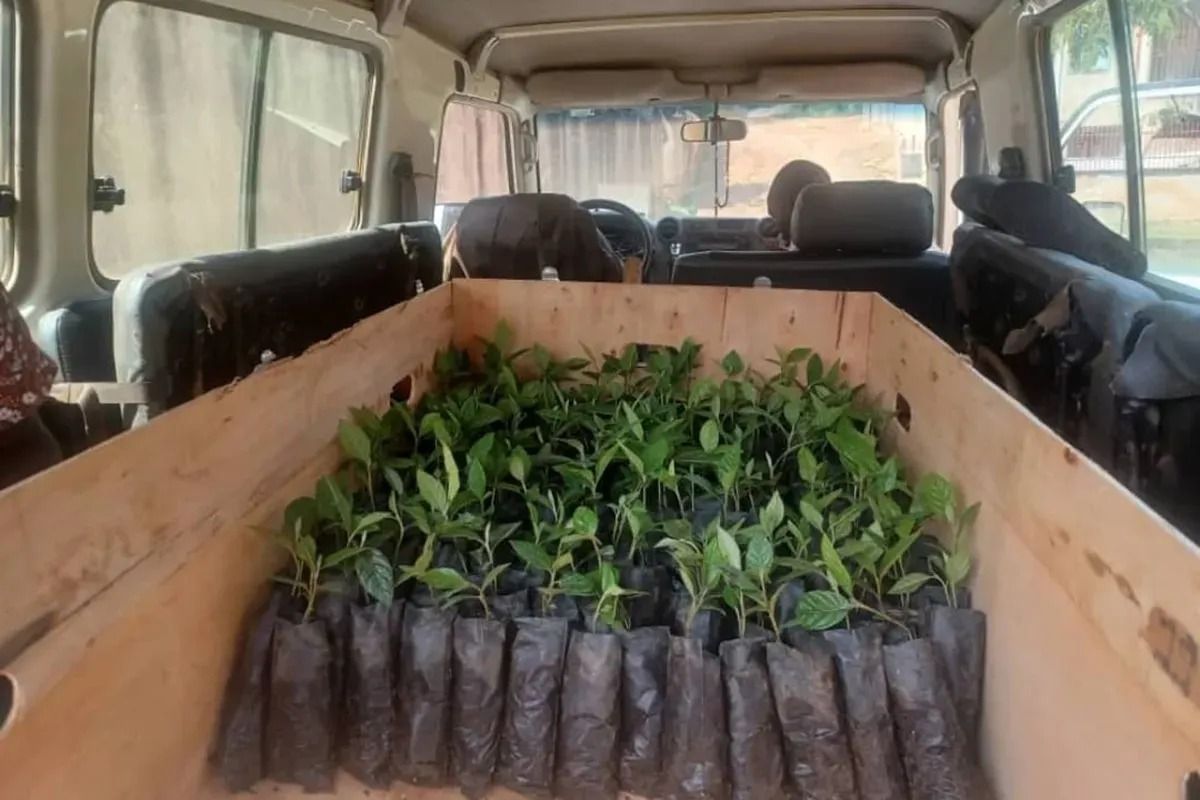
First, ecological restoration: more than 15,000 indigenous trees have been planted across 45 hectares of critical zones, forming an active green belt that reduces soil erosion and improves water infiltration.
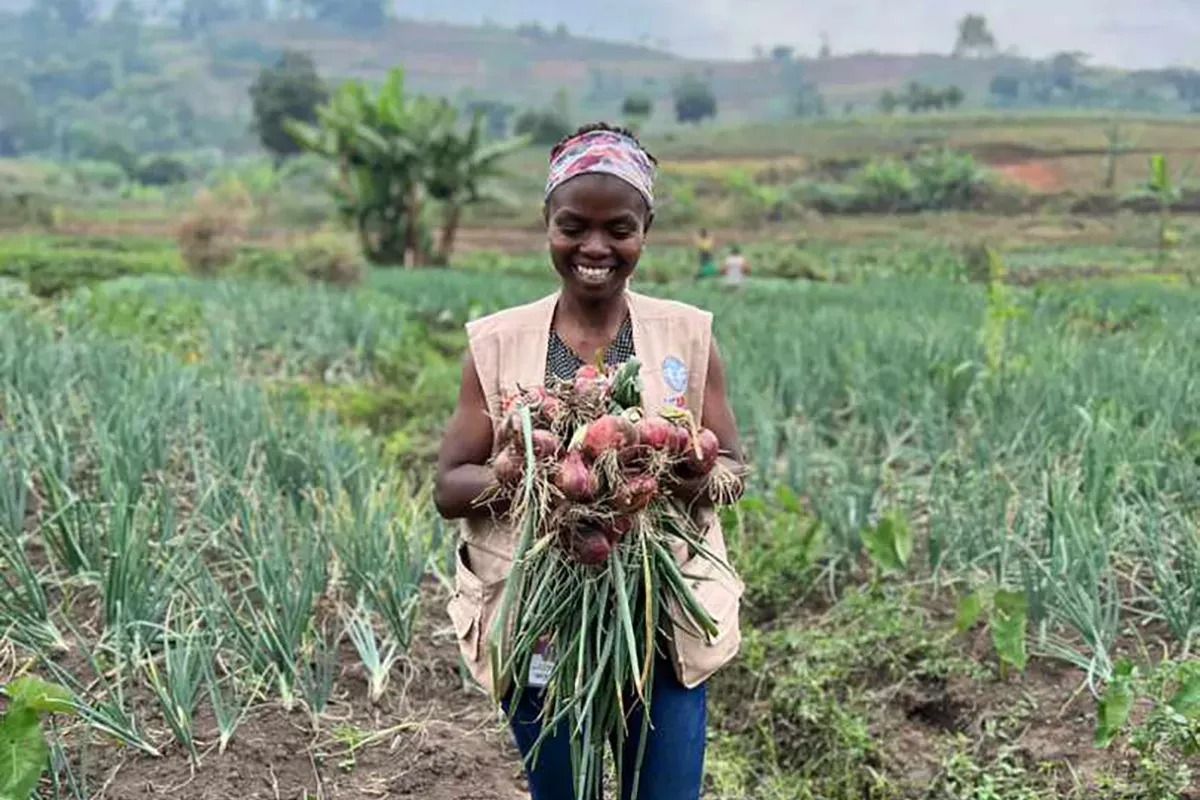
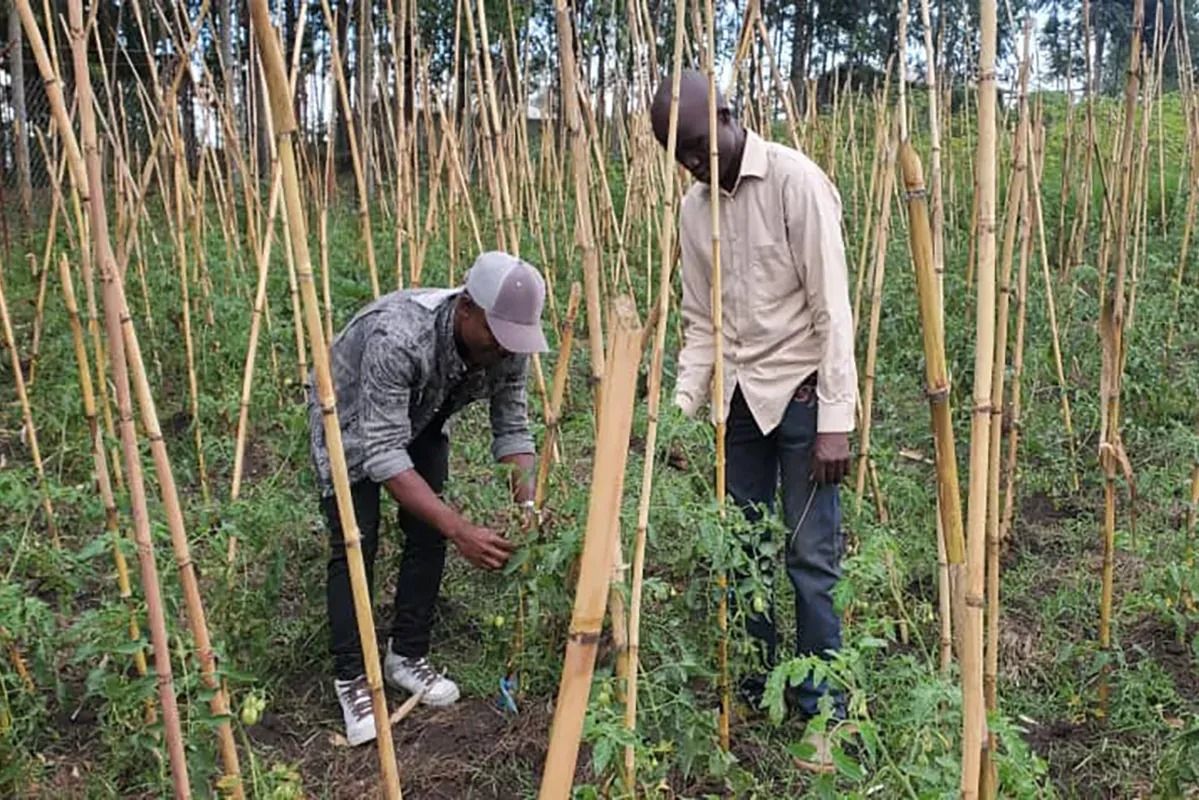
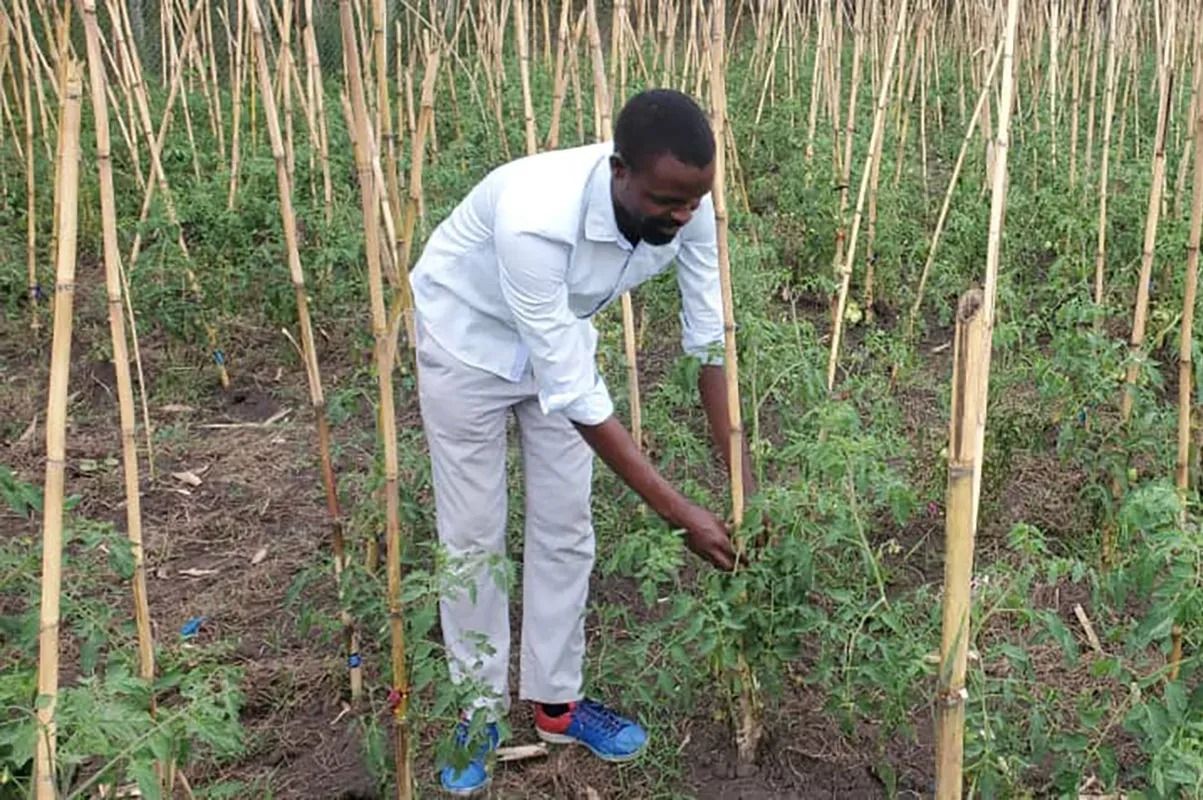
Second, agroforestry and livelihoods: twelve community gardens and three municipal nurseries have been established, supplying up to 30% of locally consumed vegetables and generating additional income for 600 families, alongside medicinal-plant production for community health.
Third, water management: five bio-engineered rain gardens, using local filtering plants, have been built in the most vulnerable neighbourhoods, cutting surface run-off by 40% and supporting groundwater recharge (reportedly the first application of this kind in the region).
The project’s approach is innovative in 3 dimensions: technically, it blends traditional and modern ecological knowledge when creating “rain gardens” with plants that avoid the precipitation run-off by letting it seep into the soil instead; financially, it created a green renewable fund that reinvests revenue from community nurseries and agroforestry sales into maintenance and expansion, and in governance terms, it uses a digital platform driven by citizens that lets residents, especially young people, report issues, propose ideas and monitor progress.
To properly implement this initiative, hydraulic and civil engineers worked with the project team on the rain gardens and drainage design while urban planners and ecologists integrate the green belt into a connected network of public spaces. Public health professionals help shape the community gardens and artists run workshops using the green spaces as open-air galleries. Seventy-five green jobs have been created for young people. Governance runs through a steering committee with several stakeholders. These are the municipal environment department, community leaders, youth associations and technical partners such as the UN Environment Programme, which oversees planning, monitoring and community engagement. The UNEP has also helped to include the initiative into Bunia’s Communal Development Plan, the National REDD+ Strategy and the National Urban Development Policy.
The initiative runs on a diversified financing model. International co-financing is provided by the ICCN (Institut Congolais pour la Conservation de la Nature). The City of Bunia covers about 40% of the budget through its Communal Climate Fund, while the initiative self-generates roughly 15% of its budget from the sale of seedlings and agricultural produce; the remainder is covered by ICCN co-financing and partner contributions. A dedicated Project Management Unit, handles logistics and operations alongside shared municipal resources and three local specialised NGOs.
Key stakeholders and resource providers include: the City of Bunia and Provincial Ministries of Environment and Urban Planning (political/technical leadership); 12 neighbourhood committees and over 600 families (site selection, planting, garden management); local NGOs including Young Greens for Climate and Action for Urban Resilience, and the Local Youth Council (volunteer mobilisation, training, awareness campaigns); the University of Bunia (scientific monitoring of biodiversity and soil quality, agroecology training); and local private companies, which provide material and logistical support and contribute to the green reinvestment fund through a public-private partnership mechanism. A revolving fund from seedling and ecotourism sales covers roughly 40% of ongoing maintenance costs, reducing reliance on external financing over time.
Monitoring by the University of Bunia and municipal partners tracks environmental, social and economic indicators through quarterly ecological assessments, monthly climate measurements and semi-annual socioeconomic surveys, drawing on satellite imagery, field monitoring, household surveys and municipal accounting.
Results to date:
The exclusive use of indigenous, irrigation-free plants has cut embodied carbon by 60% compared with conventional landscaping. Policy impact includes integration into Bunia’s 2025 Master Urban Development Plan and a new 20% green-space regulation for housing developments. Carbon-sequestration data supported an expanded Green Climate Fund proposal. The initiative was a finalist in the AIPH World Green City Awards 2026 (Living Green for Water) and won the AIPH Youth Award
The initiative faced several operational challenges, each with a documented response. Land tenure resistance from some landowners was resolved through long-term leases. An initial spate of vandalism in community gardens was addressed through environmental education programmes in schools, reframing the gardens as shared community assets. Seasonal water shortages constrained irrigation; this was resolved by installing rainwater harvesting systems and shifting to drought-resistant species.
An initial high mortality rate among certain native species (60% survival) was overcome through adaptive management, improving planting techniques and species selection raised survival to 85% after the first dry season. Seedling supply constraints were resolved by establishing a self-sustaining municipal nursery, which also cut overall costs by 40%. Participation tracking revealed timekeeping issues among youth workers, addressed by introducing mobile payment. Financing remains only partially self-sustaining: municipal funds, self-generated revenue (seedling sales and ecotourism) and public-private partnerships together cover maintenance, implying continued reliance on blended and partly external funding to sustain and expand the programme.
The approach by Bunia's Climate Shield is already being replicated: a multilingual “Green City Toolkit” is already used by 12 neighbouring municipalities, and a youth-ambassador network connects eight cities for peer learning. The green belt’s modular design allows scaling from neighbourhood to metropolitan level, and the blended financing model adapts to cities with varying resource bases. Three neighbouring cities (Beni, Goma and Butembo) have formally requested knowledge exchange, and the model has been presented at regional UN-Habitat forums on post-conflict urban resilience.
Some key success factors of this specific project were the community co-design, adaptation based on monitoring data, diversified financing, and youth engagement as a lever for both environmental outcomes and employment. Some example lessons illustrating this adaptive approach:
AIPH (2026) ‘Bunia, DR Congo: Bunia Climate-Shield’, Green City Case Studies. Available at: https://aiph.org/green-city-case-studies/bunia-dr-congo-climate-shield/ (Accessed 14 October 2026).
The Map will be displayed after accepting cookie policy


